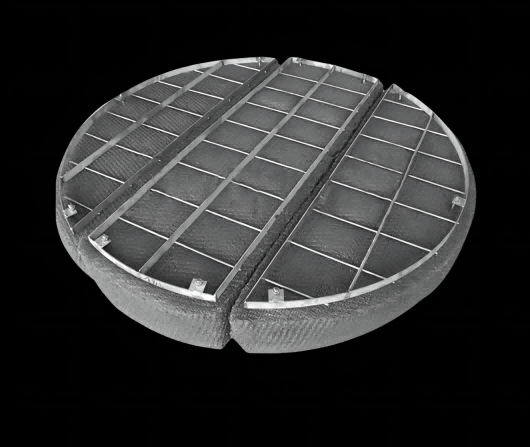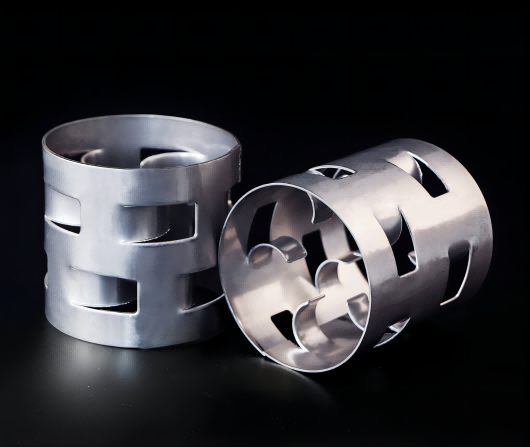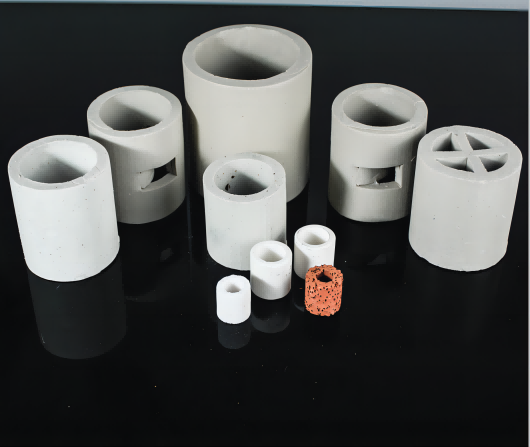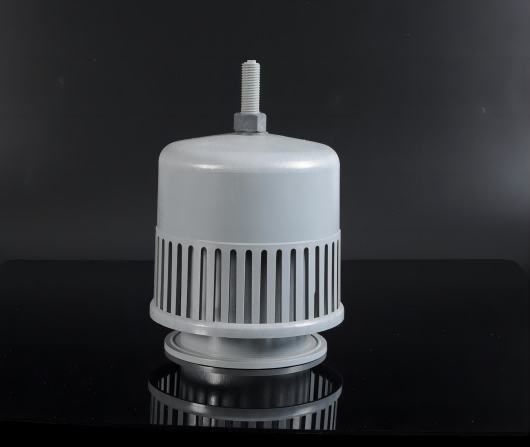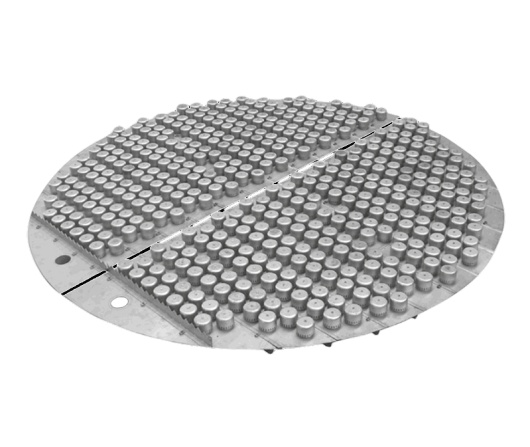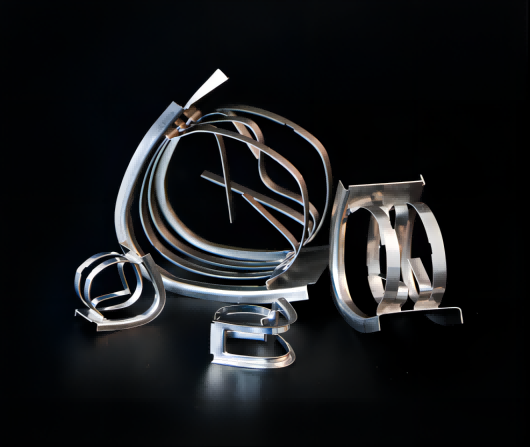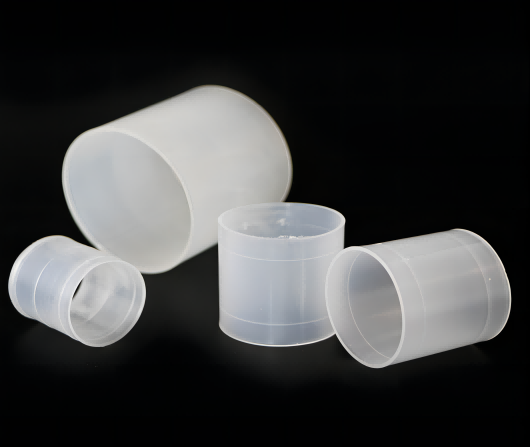

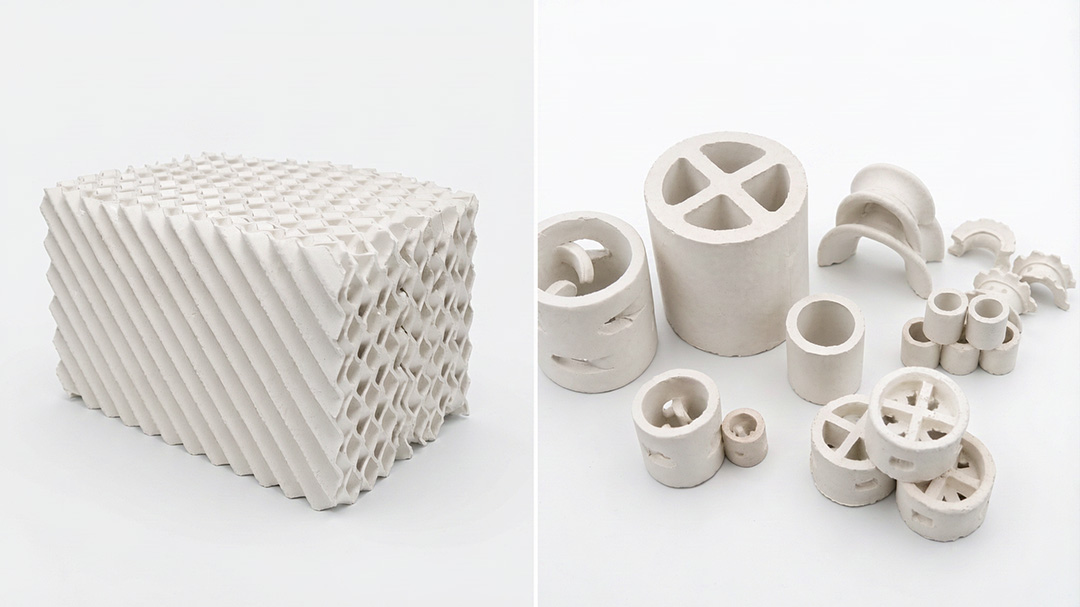
Figure 1: Ceramic structured modules vs. ceramic random rings — same material family, very different cost and performance profile.
The ceramic structured packing vs random packing debate is usually framed around HETP and surface area. That's the wrong lens. Both are ceramic, so they share acid resistance and high-temperature capability. The real question is total cost: what you pay up front, what you lose to pressure drop every year, and how often you'll have to open the tower. Below is the engineering-economics view, not a catalogue.
Engineer's Brief: Structured ceramic buys efficiency and pressure-drop margin. Random ceramic buys robustness and low maintenance cost. The crossover isn't about "which is better" — it's about whether the energy and footprint savings of structured packing repay its premium before the next turnaround.
| Dimension | Ceramic Structured Packing | Ceramic Random Packing |
|---|---|---|
| Efficiency (HETP) | 0.2–0.5 m (250Y class) | 0.6–1.2 m |
| Pressure drop | Low (15–50 Pa/m typical) | Higher (50–200 Pa/m typical) |
| Bed height for same stages | ~40–60% of random | Baseline (taller tower needed) |
| First cost (material + install) | 3–5× random (reference) | Lowest ceramic option |
| Fouling / solids | Sensitive — ordered channels plug | Tolerates solids far better |
| Cleaning & replacement | Hard to clean in place; modules scrap if cracked | Dump, wash, reload through manway |
| Service life | 15–25 yr (clean service, reference) | 5–15 yr; easy top-up |
| Distribution sensitivity | Demands ≥90 drip pts/m², level discs | More forgiving of maldistribution |
| Best fit | Vacuum, hot acid, high-purity split | Scrubbers, drying towers, dirty gas |
Generic reference values; HETP and ΔP vary with system, F-factor, L/G and ceramic grade. Replace with FXSINO project data before publication.
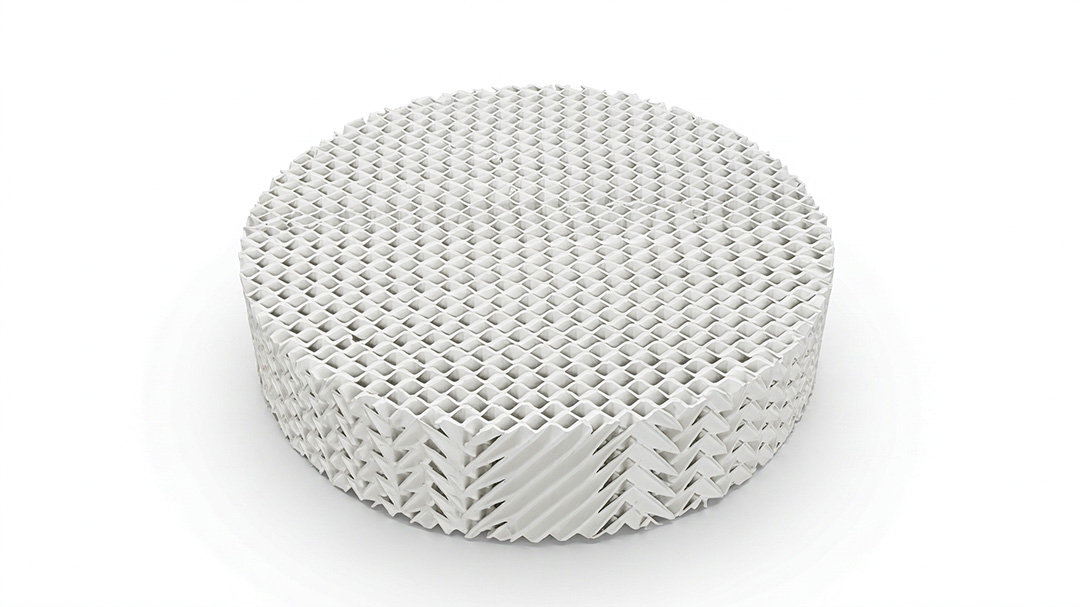
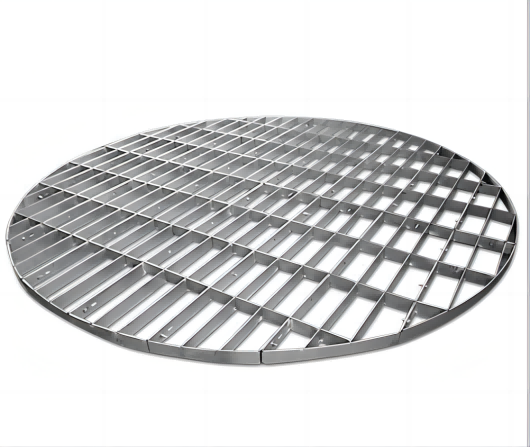
Figure 2: A structured ceramic bed depends on the support grid and distributor around it — the packing alone doesn't deliver the curve.
Split the decision into five cost buckets:
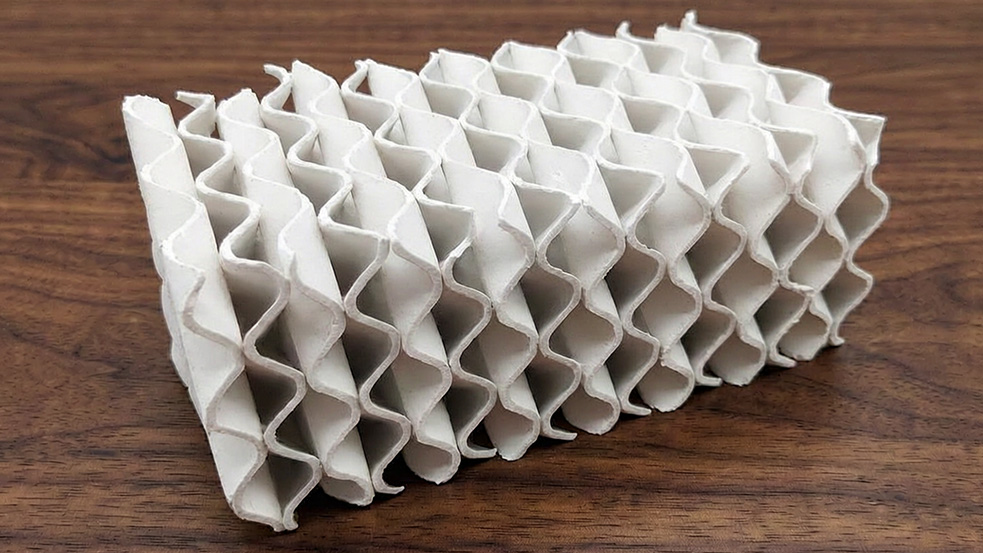
In dirty-inlet absorption columns, put 1–2 m of ceramic random packing (or super Raschig/saddle) at the foul inlet zone, then structured 250Y above it. You protect the expensive module from plugging and keep the efficiency where it matters. This often beats either pure option.
Q1: How fast does the structured premium pay back?
A: For a continuous, energy-intensive column, often 1.5–5 years through ΔP and reboiler savings. For an 8,000 h/yr scrubber the payback shortens; for a 2,000 h/yr intermittent tower it can stretch past 6–10 years, where random wins.
Q2: Can structured ceramic handle fouling service if I just clean it?
A: Poorly. Ordered channels plug fast, and in-place cleaning is ineffective. If you expect scaling or solids, use random — or the hybrid layout. Don't buy structured and hope for the best.
Q3: Is the longer lifespan of structured ceramic real?
A: In clean, non-thermal-shock service, yes — 15–25 year reference life is achievable. But a single bad heat-up, vibration-induced chipping, or HF-containing medium can destroy that advantage. Lifespan depends on duty discipline, not just the material.
FXSINO manufactures ceramic structured packing (125Y–500Y, porcelain/alumina/SiC), ceramic random rings and saddles, plus the support grids and distributors that make either choice perform. Send duty, medium, temperature and run-hours — we return a total-cost comparison, not just a quote.
Email: jackieqiu9202@gmail.com | +86 18507999558
 Адрес
: Intersection of Jinguang Avenue and Chongqing Middle Road, Anyuan Industrial Park, Anyuan District, Pingxiang City, Jiangxi
 Тел.
: +86-18507999558
 Электронная почта
: sales@fxsino.com
 WhatsApp
:
+86-18507999558
 Поддерживается сеть IPv6
Карта сайта
| XML | блог
| политика конфиденциальности