Наши превосходные продукты

  • Структурированная упаковка
  • Случайная упаковка
  • Внутреннее устройство башни
  • Другие
Структурированная упаковка
metal structured packing random packing
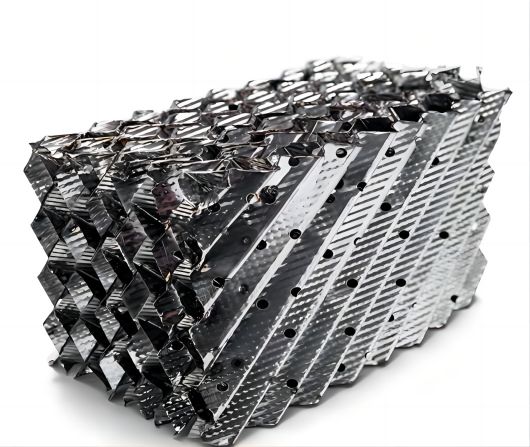
Металлическая структурированная башенная упаковка
Структурированная упаковка представляет собой своего рода насадку, расположенную и уложенную в соответствии с геометрией uiform в башне. Геометрия всей секции башни является правильной, симметричной и однородной, а путь потока газа и жидкости указан, что уменьшает явление потока в канале и стенки поток, а падение давления может быть очень небольшим. При тех же затратах энергии и перепаде давления он может обеспечить более удельную площадь поверхности, чем случайная упаковка, и достичь более высокой эффективности массопереноса и теплопередачи в том же объеме. В последние десятилетия, структурированная упаковка широко используется во многих башнях тонкой химической промышленности, парфюмерной промышленности, нефтепереработки, удобрений, нефтехимической промышленности и других областях.Структурированные упаковки доступны в двух различных углах наклона, т.е. Тип X и тип Y. Уплотнения типа Y имеют наклон и угол около 45° от горизонтальной оси и являются наиболее широко используемыми. Уплотнения типа X имеют угол наклона 30° от горизонтальной оси и используются в системах с высокой производительностью и приложения с низким перепадом давления.
Plastic perforated structured packing
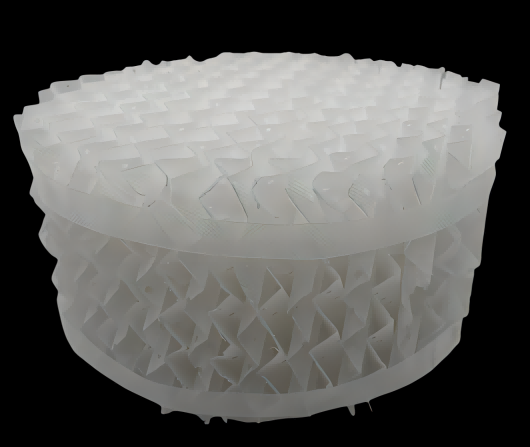
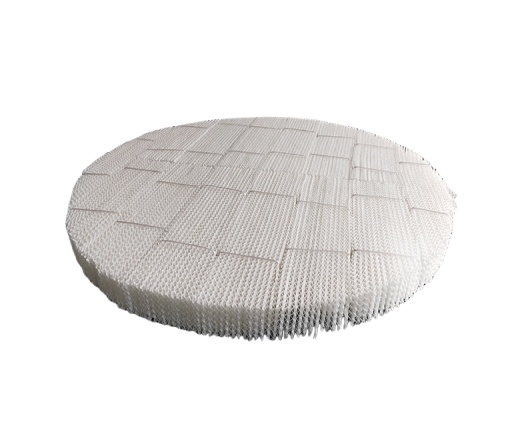
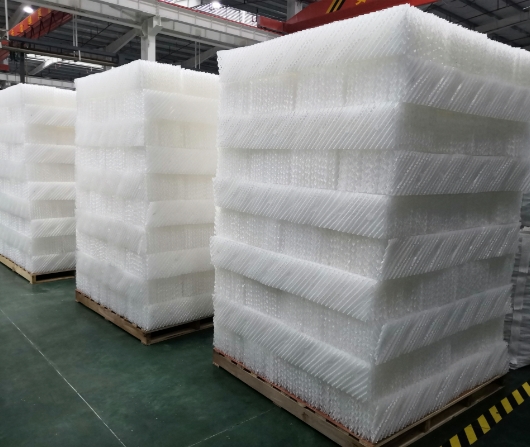
Упаковка из пластиковой гофрированной пластины Tower Packing
С тех пор как Metal Mellapak был разработан и принят рынком. Ученые находят Металлическая упаковка из гофрированного картона не подходил ни для одного требования среды (кислота). Кроме того, его очень сложно широко использовать в промышленности. После этого, Пластик Упаковка из гофрированного картона был рожден. По сравнению с пакетом металлических гофрированных пластинОн имеет большой поток, низкое падение давления, большую площадь поверхности и так далее. 
ceramic honeycomb high efficiency gas purification
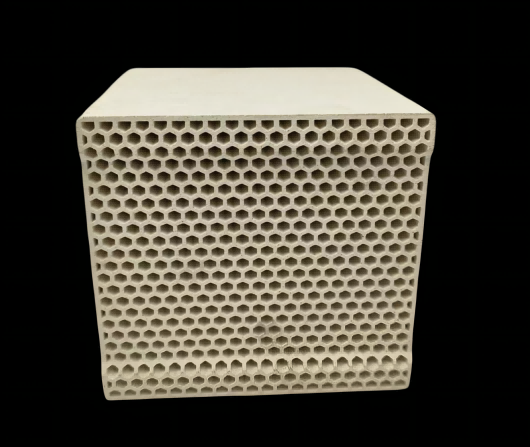
Очистка отходящих газов высокой эффективности молекулярной сетки цеолита сота
В настоящее время для очистки ЛОС в основном используется активированный уголь. Поскольку активированный уголь нельзя анализировать при высокой температуре, его регулярно заменяют. Однако активированный уголь, адсорбированный органическими веществами, является опасным химическим веществом с высокими затратами на обработку. Этот экологически чистый адсорбирующий материал представляет собой гидрофобное молекулярное сито, которое отличается от обычного молекулярного сита тем, что оно преимущественно адсорбирует воду в газе. Он обладает высокоселективной адсорбционной способностью по отношению к органическим веществам и может растворяться при высокой температуре, что обеспечивает непрерывную адсорбцию-регенерацию. Адсорбционный материал приобретает ячеистую структуру в результате специального процесса подготовки. Адсорбционная способность органических веществ составляет более 2%, которые можно адсорбировать и регенерировать в течение длительного времени. Сотовое молекулярное сито aАдсорбционная система dopt для снижения концентрации выхлопных газов и объема воздуха и в то же время взаимодействует с технологией каталитического сгорания для снижения эксплуатационных расходов.  
wire mesh structured packing
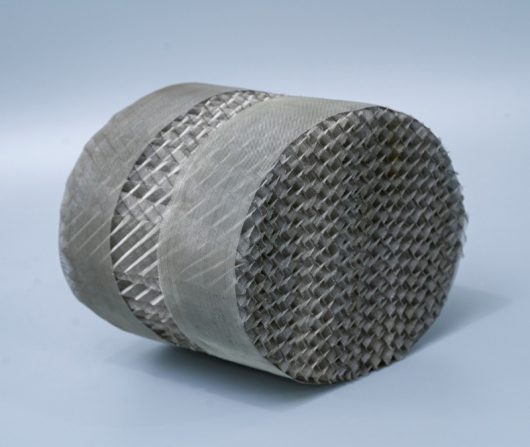
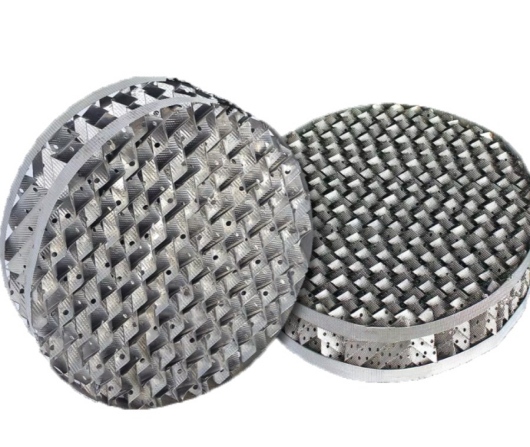
Структурированная набивка из проволочной сетки Tower Packing
Структурированная насадка из проволочной сетки имеет высокую удельную поверхность. В то же время, благодаря уникальному капиллярному эффекту сетка. Поверхность упаковки имеет лучшую смачиваемость. Поэтому он имеет высокую эффективность разделения. По сравнению с другими видами упаковки, он имеет более низкий перепад давления и меньше удерживает жидкость, и он особенно подходит для материалов, которые трудно отделить и чувствительны к нагреву. системы. Основными материалами для изготовления набивки из проволочной сетки являются нержавеющая сталь, медь, алюминий, железо, никель и т. д.  
plastic structured packing
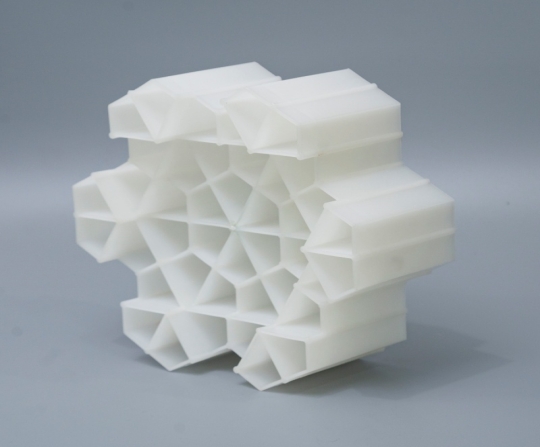
Пластиковый опорный блок сотовой формы
Пластиковый опорный блок сотовой формы Изготовлен из синтетического пластика методом литья под давлением. Формулу можно корректировать в зависимости от к различным условиям работы для достижения наилучшего эффекта. Он полностью заменяет обычно используемую легкую керамическую набивку. до. Разработанный нами пластиковый опорный блок сотовой формы может использоваться многократно, имеет большую удельную поверхность. и большая вентиляционная способность, а ее эффективность вдвое выше, чем у легкого фарфора. Особенно в процессе обслуживания, легкая керамическая упаковка становится твердым мусором, с которым сложно справиться. Но пластиковый опорный блок сотовой формы может быть повторно используются в качестве возобновляемых ресурсов, что обеспечивает защиту окружающей среды и энергосбережение. Через долгосрочное испытание коксования Башня десульфурации. Доказано, что пластиковый опорный блок сотовой формы обладает сильной антиблокирующей способностью и превосходными Эффект разделения и очистки.        
pph perforated structured packing
Упаковочная башня из гофрированного листа PPH
С тех пор как Metal Mellapak был разработан и принят рынком. Ученые находят Металлическая упаковка из гофрированного картона не подходил ни для одного требования среды (кислота). Кроме того, его очень сложно широко использовать в промышленности. После этого, Пластик Упаковка из гофрированного картона родился. По сравнению с пакетом металлических гофрированных пластинОн имеет большой поток, низкое падение давления, большую площадь поверхности и так далее. 
252Y structured packing manufacturers
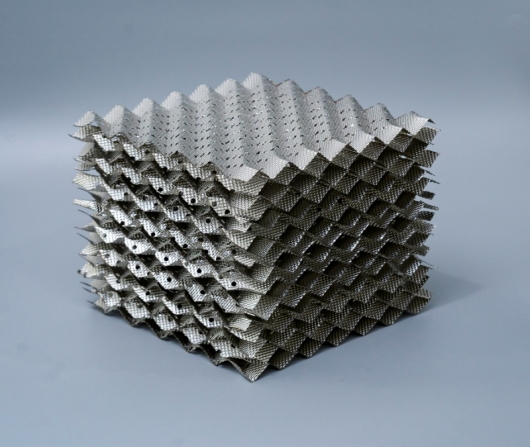
Перфорированная гофрированная пластина из нержавеющей стали типа 252Y для структурированной упаковки
Геометрическая структура обеспечит большую удельную площадь поверхности. Капиллярная функция экрана также увеличивает смачиваемость поверхности. При заполнении верхний и нижний упаковочные лотки пересекаются под углом 90°, что обеспечивает высокую эффективность, пониженное давление и большой расход. Он используется при вакуумной дистилляции, атмосферной дистилляции и процессе абсорбции трудно отделяемых или термочувствительных веществ.  
copper structured packing column
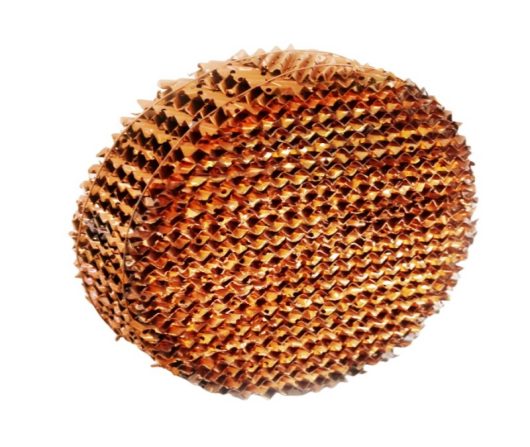
Гофрированная упаковка с медной металлической диафрагмой
Его формируют из гофрированных листов перфорированного тисненого металла или проволочной сетки. В результате получается очень открытая сотовая структура с наклонными каналами потока, обеспечивающими относительно большую площадь поверхности, но с очень низким сопротивлением потоку газа. Улучшения поверхности были выбраны для максимального увеличения растекания жидкости. Эти характеристики, как правило, демонстрируют значительные преимущества в производительности при низком давлении и низкой скорости орошения. Металлическая структурированная набивка изготавливается в широком диапазоне размеров и с разной высотой обжима. Площадь набивки варьируется от 50 м²/м³ (самая низкая эффективность, самая высокая производительность) до 750 м²/м³ (самая высокая эффективность, самая низкая производительность).
Случайная упаковка
metal tower packing
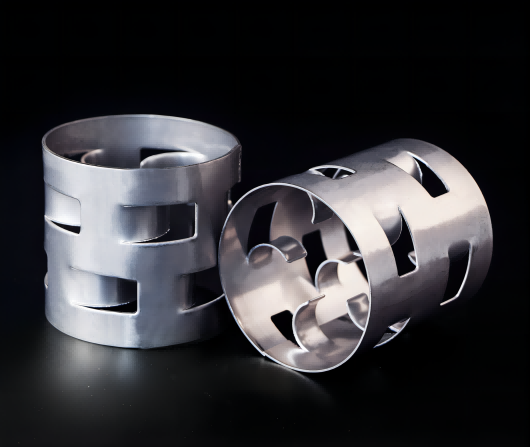
Высокопроизводительное металлическое кольцо Палля случайной упаковки из металла
Изобрела немецкая компания BASF рандомную насадку первого поколения. К по сравнению с кольцом Рашига, наиболее важным улучшением является увеличение двух рядов язычок внутрь. Это способствует повышению текучести жидкости и газа и улучшению массы набивки башни. производительность передачи.  
High performance ceramic pall ring
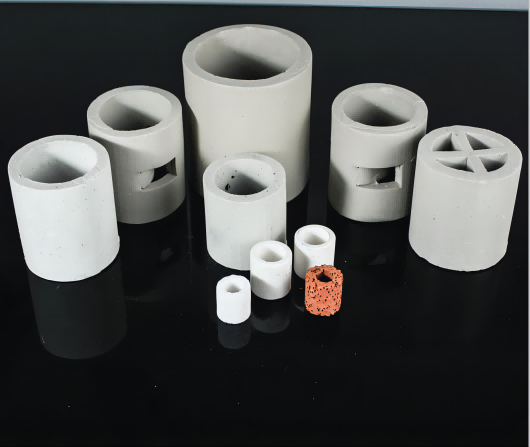
Керамическое кольцо Палля случайной упаковки
Изобрела немецкая компания BASF рандомную насадку первого поколения. К по сравнению с кольцом Рашига, наиболее важным улучшением является увеличение двух рядов язычок внутрь. Это способствует повышению текучести жидкости и газа и улучшению массы набивки башни. производительность передачи.  
metal cascade ring tower packing
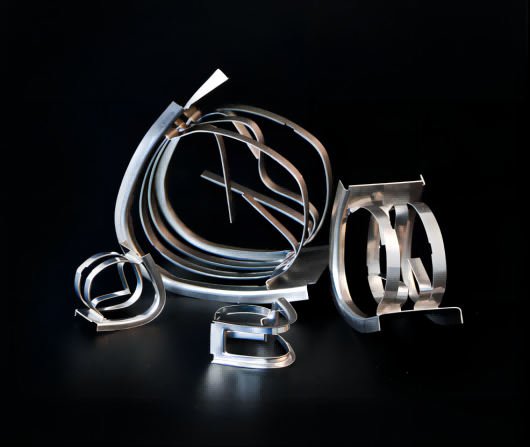
Металлическая упаковка Intalox Saddle Ring Tower
Благодаря форме этого рюкзака он напоминает седло, так называемое седло кольцо или Берл Ринг. Материал самого раннего седла — керамика. В нашем реальном приложении, когда газ течет вверх, жидкость будет течь вниз по дуговому каналу. Этот путь Движения будет напрямую уменьшить поток стенок. Однако арочная внешняя рама также является причиной перекрытие и соединение. Поэтому ученые превращают два конца в прямоугольники. контактная поверхность. Это улучшение уменьшит возникновение мостов. 
raschig ring
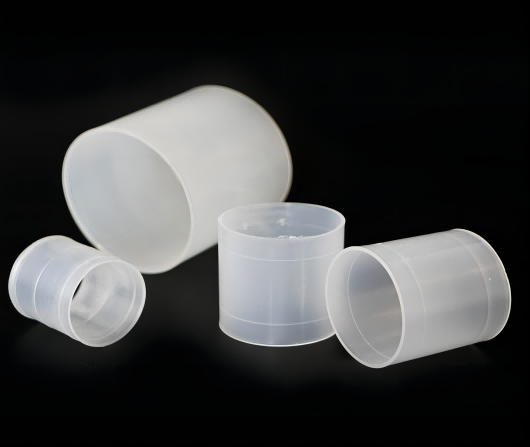
Пластиковая упаковка кольцевой башни Рашига
Это самая ранняя разработка случайная упаковка, которому его высота равна снаружи диаметр. Кольцо Рашига был изобретен немецким химиком Фридрихом Рашигом в 1914 год также знаменует собой вступление развития заливок в научное русло. Однако в реальном применении, например «Поток в стенке, поток в канале и т. д.» часто случалось в уложенной постели. 
plastic snowflake ring tower packing
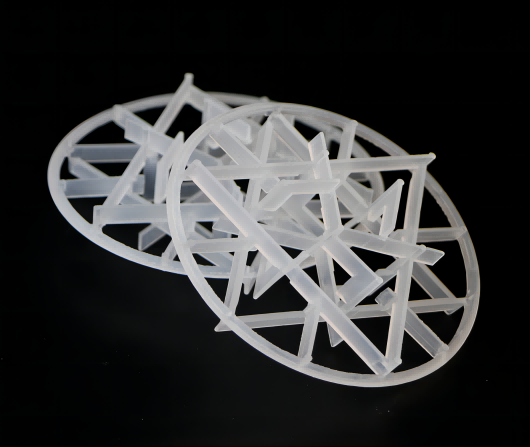
Пластиковая снежинка случайной упаковки Tower Packing
Пластиковое кольцо-снежинка. является высокоэффективным башенная насадка, получившая название благодаря своей форме. Она имеет низкий удельный вес, высокую температура затопления, большая пористость, большая масса высота единицы передачи. Кроме того, это случайное набивка имеет меньший перепад давления, что уменьшает явление противодавления и сводит к минимуму энергопотребление Процесс зачистки. Пластиковое кольцо-снежинка очень экономичный.можно применять в хлоре и производство брома, разделение воздуха и процесс водяного охлаждения. 
plastic flat ring
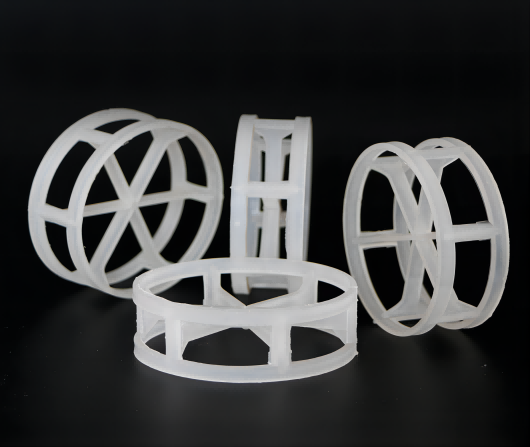
Пластиковая упаковка с плоским кольцом
Плоское кольцо также называется SMR(Супер Мини Кольцо), Это продвинутый случайная упаковка в тот упаковка башни колонны. Он имеет аналогичную структуру с каскадным мини-кольцом. не отбортовочная конструкция сверху и снизу. Это может улучшить прочность упаковки отрегулируйте дугу внутреннего лезвия. Он имеет разумную структуру потока, низкое давление.уверенный перепад и высокая производительность массообмена. Супер мини-кольцо имеет два основных типа: которые называются QH-1 и QH-2. 
plastic super saddle ring tower packing
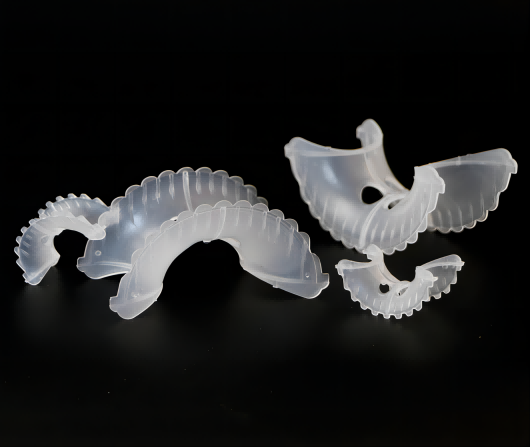
Пластиковая упаковка для кольцевой башни Super Saddle
Это было улучшенное кольцо, основанное на структуре кольца Инталокс. Самое большое улучшениеОбратите внимание, что дуговой профиль седла Intalox изменится на волнистый или зубчатый. тем временем, увеличитьнесколько пор в среднем положении канала дуговой жидкости. Этот изменение структуры не только увеличивает контактный зазор набивки, но и улучшает движение и распределение газа и жидкости в слое упаковки
plastic ralu ring tower packing
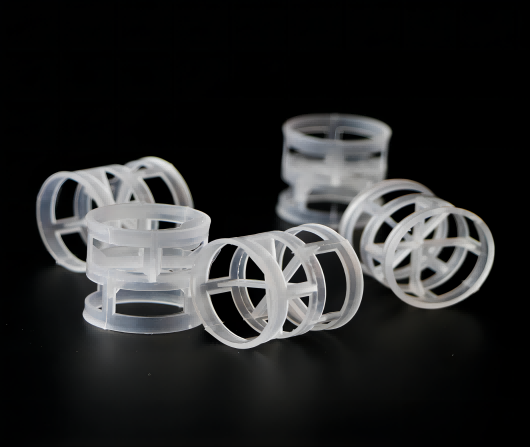
Пластиковая упаковка Ralu случайной упаковки Tower Packing
Это улучшенное кольцо Палля. Основное улучшение заключается в увеличении оборачиваемости. и толщина стенок с обоих концов. Без изменения эффективности разделения слой высоту можно уменьшить. Чтобы уменьшить падение давления..
Внутреннее устройство башни
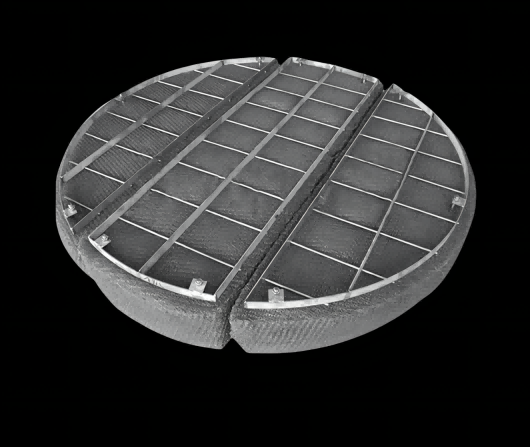
Knitted Wire Mesh Demister Wire Mesh Mist Eliminator
Вязаная проволочная сетка. Уловитель тумана из проволочной сетки.
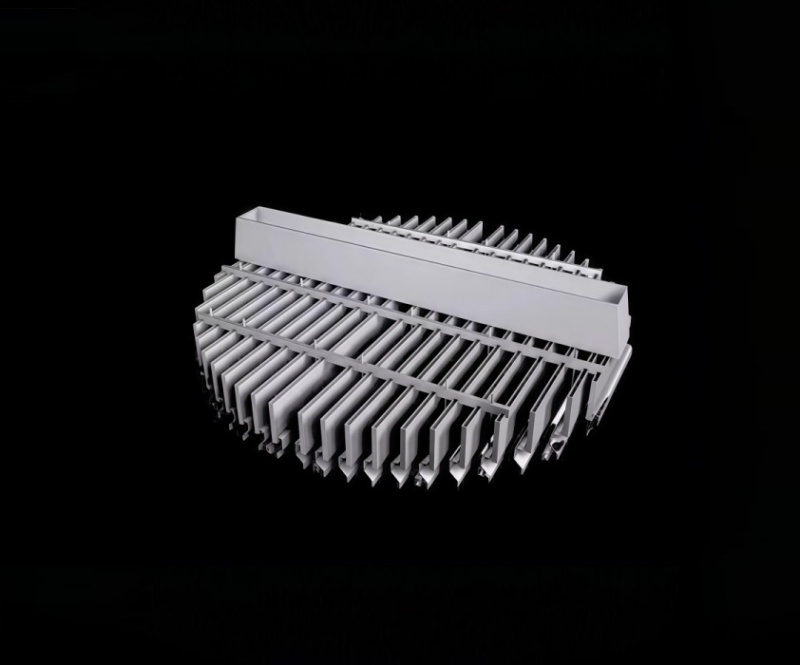
Полный ассортимент устройств для удаления тумана, включая туманоуловители с сетчатыми подушечками, туманоуловители лопастного типа. и жидкие коалесцеры для разделения увлеченных жидкостей. Продукция доступна из различных металлов, пластмасс и термопластов для широкого спектра применений.Туманоуловители используются в верхней части насадочной колонны или вместе с сборной тарелкой между двумя насадочными слоями. Они отделять капли жидкости от газового потока. Выброс капель из колонны и/или унос жидкости с одной ступени на следующий сведен к минимуму. Наши туманоуловители разработаны для оптимальной работы в конкретных условиях применения. 
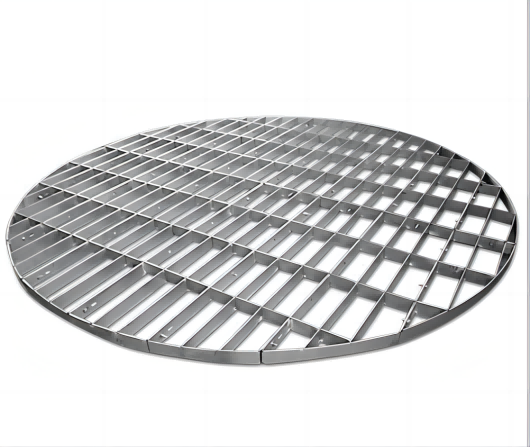
Support Grid Plate
Решетчатая опорная пластина с произвольной насадкой для дистилляционной колонны
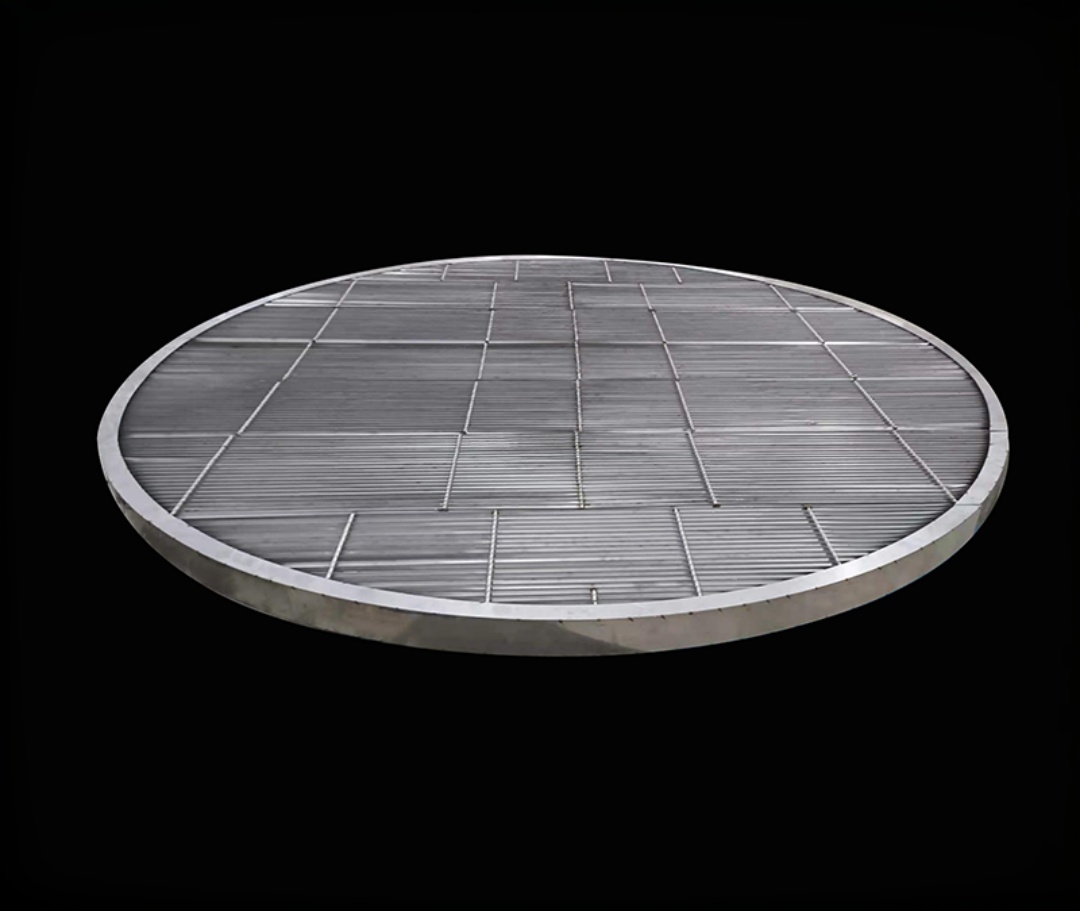
Опорная решетчатая пластина должна быть сконструирована таким образом, чтобы обеспечить как можно более неограниченный поток газов и жидкостей в колонне. Это особенно важно в зоне между опорной решеткой и насадочным слоем, поскольку существует опасность блокировки потока газа неподходящей насадочной опорой. Основной функцией этих устройств является структурная поддержка насадочного слоя башни. Опорные сетки работают как в структурированных, так и в случайных процессах упаковки для самых разных целей. 
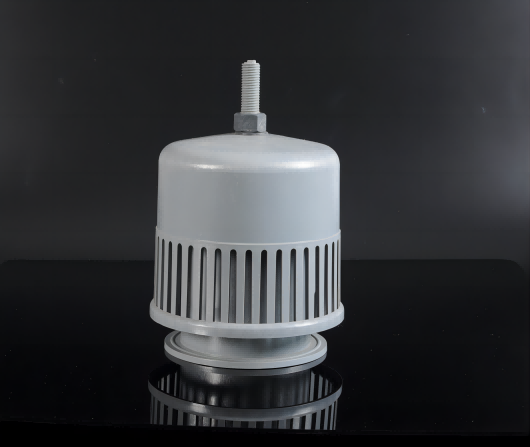
plastic bubble cap tray
Пластиковая пузырчатая крышка для химической промышленности
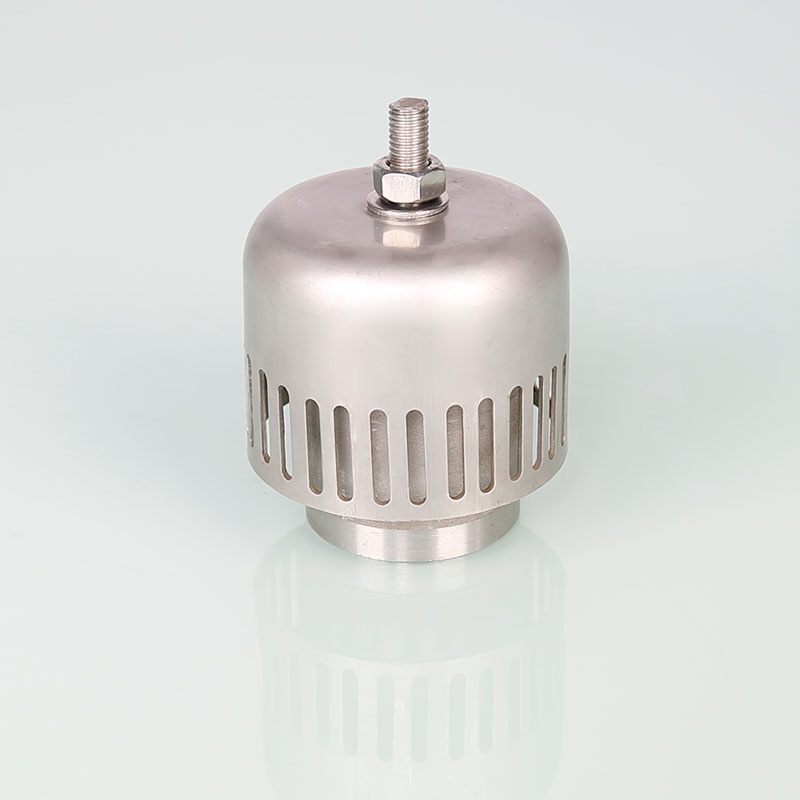
Лоток для пузырьковых крышек представляет собой плоскую перфорированную пластину со стояками (наподобие труб) вокруг перфораций и заглушками в виде перевернутых чашек над стояками.Колпачки обычно снабжены прорезями или отверстиями, через которые выходит пар. Крышка монтируется таким образом, чтобы между стояком и крышкой было пространство для прохождения пара. Пар поднимается через стояк и направляется вниз по крышке, проходя через щели в крышке и, наконец, барботируя через жидкость на тарелке. Поскольку пару приходится проходить через множество каналов, это приводит к более высокому перепаду давления и меньшей производительности, чем у других традиционных тарелок. Жидкость и пена заполняются тарелкой на глубину, по меньшей мере равную высоте переливного устройства или высоты стояка, что дает тарелке с барботажной крышкой уникальную возможность использования для реакционных задач.   
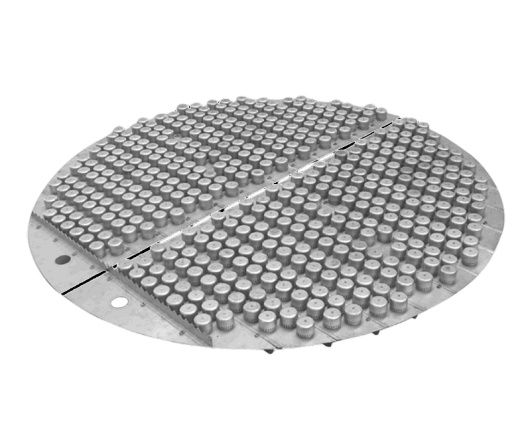
metal bubble cap tray
Металлический лоток с пузырьковой крышкой для химической промышленности
Тарелки с пузырьковыми крышками используются в основном в приложениях с очень низкой загрузкой жидкости и очень высокой гибкостью, где требуются большие диапазоны регулирования. В пузырьковой крышке над каждым отверстием установлен стояк или дымоход, а также крышка, закрывающая стояк. Крышка монтируется таким образом, чтобы между стояком и крышкой было пространство для прохождения пара. Пар поднимается через дымоход и направляется крышкой вниз, наконец выходит через щели в крышке и, наконец, пузырится через жидкость на поддоне.   
Металлическая пузырьковая крышка для химической промышленности
Лоток для пузырьковых крышек представляет собой плоскую перфорированную пластину со стояками (наподобие труб) вокруг перфораций и заглушками в виде перевернутых чашек над стояками.Колпачки обычно снабжены прорезями или отверстиями, через которые выходит пар. Крышка монтируется таким образом, чтобы между стояком и крышкой было пространство для прохождения пара. Пар поднимается через стояк и направляется вниз по крышке, проходя через щели в крышке и, наконец, барботируя через жидкость на тарелке. Поскольку пару приходится проходить через множество каналов, это приводит к более высокому перепаду давления и меньшей производительности, чем у других традиционных тарелок. Жидкость и пена заполняются тарелкой на глубину, по меньшей мере равную высоте переливного устройства или высоты стояка, что дает тарелке с барботажной крышкой уникальную возможность использования для реакционных задач.   
Пластиковая опора для колонн и башен
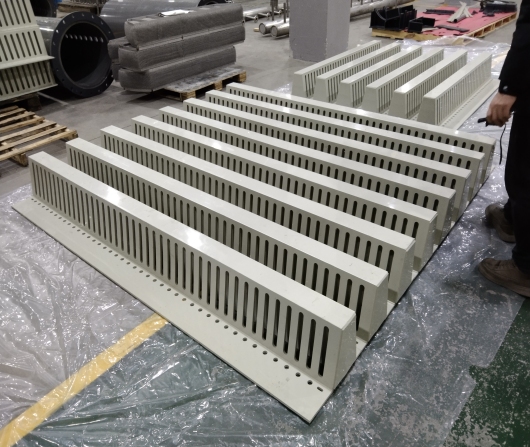
Пластик горбовые опоры (также называется упаковочные опорные сетки или ограничители кровати) являются важнейшими компонентами в упакованные колонны и дистилляционные башни, предназначенные для равномерного распределения веса и предотвращения разрушения или блокировки нижних секций колонны насадочным материалом (например, кольцами Палля, кольцами Рашига или структурированной насадкой).Основные характеристики пластиковых опорных горбовМатериал: Сделано из ПП (полипропилен), ПВДФ (поливинилиденфторид) или ХПВХ, выбранный по химической стойкости.Дизайн: Волнообразная (горб) или сетчатая структура, обеспечивающая высокую открытая местность (60-90%) для оптимального поток жидкости.Функция:Поддерживает вес упаковочного материала для предотвращения поломки.Обеспечивает равномерное распределение газа и жидкости.Предотвращает падение набивки в нижнюю часть колонны.Коррозионная стойкость: Подходит для кислотные, щелочные и органические химические среды.Легкий и простой в установке: Гораздо более долговечны, чем металлические опоры в коррозионных условиях.Приложения1. Химическая и нефтехимическая промышленностьДистилляционные, абсорбционные и скрубберные колонны для:Процессы с серной, азотной и соляной кислотой.Очистка газа (удаление H₂S, CO₂).Рекуперация растворителей в фармацевтической и агрохимической промышленности.2. Водоподготовка и очистка сточных водБашни скруббера для удаления аммиак, хлор и ЛОС.Градирня поддержка упаковки для максимизации эффективность теплопередачи.3. Контроль загрязнения воздухаИспользуется в Системы десульфурации дымовых газов (ДДГ) держать случайная упаковка.Скрубберы для контроля запаха для промышленных выбросов.4. Нефтегазовая промышленностьБашни осушки гликоля (переработка природного газа).Установки аминовой очистки (удаление H₂S и CO₂).
Другие
bio ball filter
Пластиковая биошариковая упаковка для очистки воды
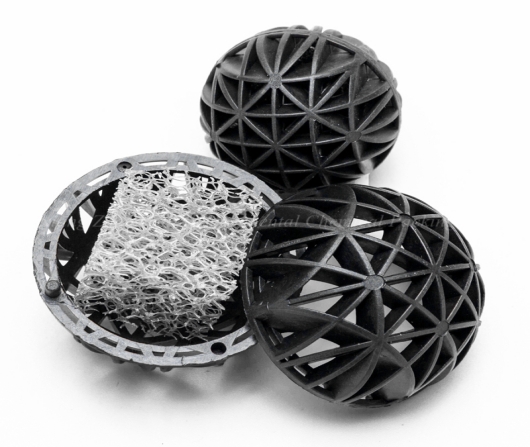
Его изобрел Джагер Три. Вообще говоря, отсутствие большой площади поверхности является самым большим преимуществом Tri-pack. Особая форма ребер, стоек и капельных стержней придает насадочному материалу башни Tri-Packs превосходные характеристики смачивания и способность поддерживать равномерное распределение жидкости по всему слою. В традиционной теории массопереноса мы часто думаем, что большая площадь поверхности повысит эффективность массопереноса. Иногда избыточная площадь поверхности может препятствовать контакту газа и жидкости и создавать более высокие перепады давления. В конечном итоге это приведет к блокировке канала Пакинга. Основываясь на этом новом понимании, Джагер изобрел Три-пак. По сути, этот пакет обеспечивает максимальное поверхностное сжатие между газом и очищающей жидкостью за счет облегчения непрерывного образования капель насадочным слоем. Он был признан лучшим оборудованием для очистки воздуха, дегазатора и скруббера.    
MBBR packing for water treatment
Пластик MBBR для очистки воды
Это тип процесса очистки сточных вод, который был впервые изобретен профессором Халлвардом Дегором из Университета науки и технологий в конце 1980-х годов. Система MBBR состоит из аэрационного резервуара (похожего на резервуар с активным илом) со специальными пластиковыми носителями, которые обеспечить поверхность, на которой может расти биопленка. Носители изготовлены из материала плотностью, близкой к плотности воды (1 г/см3). Примером является полиэтилен высокой плотности (ПЭВП), плотность которого близка к 0,95 г/см3. Носители будут смешиваться в резервуаре с помощью системы аэрации и, таким образом, будут иметь хороший контакт между субстратом в поступающих сточных водах и биомассой на носителях.  
igel ball
Пластиковый шарик Igel для очистки воды
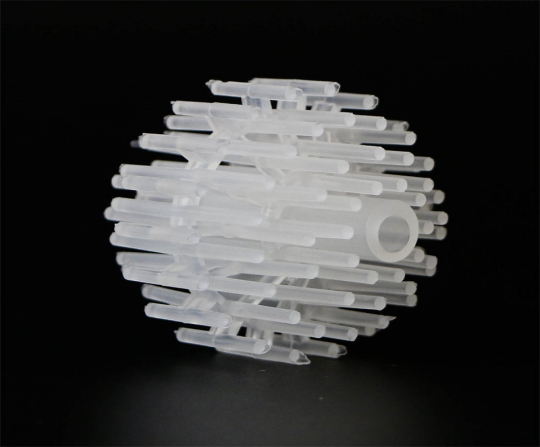
Игел мяч представляет собой распространенный биофильтрационный материал, в котором в качестве сырья в основном используется полипропилен, который перерабатывается в колючий многоигольный пластиковый шарик методом литья под давлением. Небольшой цилиндрический корпус равномерно распределен в шаре, увеличивая точку распределения пара и жидкости, что позволяет полностью рассеивать пар и жидкость.      

Добро пожаловать в Fxsino

1998
Компания Основан в
  • 600
    0+

    Профессиональные сотрудники

  • 168
    0+

    Страна сотрудничества

  • 24*7
    24*7

    Восторженный онлайн-сервис

ПОСЛЕДНИЕ НОВОСТИ

Новости
  • 082026-04
    Structured Packing Material Selection and Procurement Decision Guide
      Structured Packing Material Selection and Procurement Decision Guide In structured packing procurement decisions, the lowest quote often carries the highest long-term risks. A single material selection error can lead to unplanned shutdowns, product contamination, and replacement costs that easily offset years of "cost-saving" achievements. This article aims to provide procurement, technical, and project management professionals with a comprehensive decision-making framework that integrates technical compatibility, risk quantification, and economic assessment, helping you make wise choices that ensure long-term stability of your equipment.     Part 1: Material Properties and Cost Analysis Procurement officers often receive quotes simply labeled "316L," "PVDF," or "ceramic." Behind these names lie vastly different performance boundaries and cost logic. Only by truly understanding material characteristics can sustainable choices be made. 1. 316L Stainless Steel: Not Always the "Standard Answer"   Procurement Perspective 316L is the most common "standard material" with transparent market supply, numerous suppliers, and easily comparable prices, often viewed as a "reliable, durable" choice.   Technical Reality 316L offers high mechanical strength, suitable for tall towers and heavy-load conditions, with good high-temperature resistance (up to 450°C). However, its fatal weakness is Chloride-Induced Stress Corrosion Cracking (CISCC). In environments containing water, chloride ions (>50ppm), and temperatures above 60°C, cracking risk increases dramatically—this isn't ordinary corrosion but sudden, brittle fracture with minimal warning signs, potentially causing serious incidents.   Project Risk Alert Choosing 316L means you must have absolute certainty about chlorine content in raw materials and operational temperature fluctuations. Otherwise, it becomes a hidden "time bomb" that may cause unplanned shutdowns, completely derailing project commissioning and ROI calculations. Recommendation: Strictly limit to clearly chlorine-free or very low-chlorine conventional high-temperature, high-pressure conditions. In situations with uncertainty, its initial "low price" may be meaningless.   2. PVDF: Redefining Cost-Effectiveness for Corrosive Conditions Procurement Perspective As a "plastic" material, PVDF typically costs more than standard 316L, often raising the question: "Why not use cheaper metal?"   Technical Reality PVDF exhibits excellent corrosion resistance to strong acids, strong alkalis, halogens (chlorine, fluorine, etc.), and most solvents, making it the preferred or only choice for lithium battery electrolyte wastewater, fluorine/chlorine-containing acidic gases, high-concentration chemical wastewater, and other corrosive media. Note its long-term service temperature limit is generally 140-150°C; exceeding this reduces mechanical performance. PVDF packing is lightweight (about 1/5 of metal), offering multiple hidden cost savings: installation time can be reduced by over 30%, and later inspection, cleaning, or replacement labor and safety costs are significantly lower. In frequently maintained conditions, its lifecycle cost advantages are substantial.   Case Reference An electronic chemicals company used PVDF structured packing for strong acid mixture separation. After 5 years of continuous operation, tower inspection showed the packing structure remained intact, avoiding high-end product scrap risks from metal ion contamination. The client calculated avoided quality losses far exceeding the packing price difference.   3. Ceramic: Necessary Insurance for Extreme Conditions Procurement Perspective Ceramic packing is expensive, often viewed as the "last resort."   Technical Reality Its irreplaceability stems from exceptional temperature resistance (over 1000°C) and corrosion resistance (resistant to all solvents except hydrofluoric acid), making it the only feasible option for high-temperature gas purification, phthalic anhydride production, coking desulfurization, and other extreme environments. Core risk lies in brittleness. It fears mechanical and thermal shock, requiring high installation quality.   Project Decision Positioning Choosing ceramic packing is essentially paying a "premium" for long-term stable operation under extreme conditions. Once selected, installation guidance, heating curve control, etc., must be written into strict construction and operational specifications, with supplier on-site technical support capabilities as a key assessment factor.   Part 2: Total Cost of Ownership (TCO) Comparative Analysis In material selection decisions, initial purchase price is just the tip of the iceberg. True cost assessment should be based on lifecycle Total Cost of Ownership. The table below provides a TCO comparison framework for three mainstream materials: Total Cost of Ownership (TCO) Comparison Table Note: This table serves as a comparative analysis framework; specific values should be determined based on actual conditions, supplier quotes, and risk assessment. Cost Item Option A (316L) Option B (PVDF) Option C (Ceramic) Remarks 1. Procurement Cost (Quote) (Quote) (Quote) Based on equivalent performance specifications 2. Installation Cost Estimate Standard 30% reduction (lightweight) May increase (requires special guidance) Includes lifting, labor, construction time, etc. 3. 10-Year Energy Cost Estimate Baseline May be lower (pressure drop optimization) Case-dependent Related to packing efficiency, pressure drop characteristics 4. Maintenance/Cleaning Cost Estimate Standard Significantly reduced Standard Considering tower opening frequency, cleaning difficulty, spare part replacement 5. Expected Lifespan 5-8 years (risk-dependent) 10-15 years+ 10 years+ (if properly installed) Directly affects replacement cycles and capital expenditure 6. Risk Cost (Assessment) High (if chlorine present) Low Medium (installation risk) Requires technical assessment of probability and losses   Risk Cost Calculation Example: Assuming in chlorine-containing conditions, 316L packing has a 25% probability of corrosion failure within 5 years, with single incident losses (shutdown + replacement + order loss) estimated at 8 million RMB, the expected risk cost is: 8M × 25% = 2 million RMB. This should be included in TCO analysis.   Part 3: "Four-Step Decision-Making Methodology" for Cross-Departmental Consensus To align technical, procurement, and project objectives, decision-making must evolve from "intuition" and "convention" to "data" and "process." Step 1: Technical Leadership - Create "Process Passport" Before requesting quotes, the technical department should lead in preparing a "Process Task Book" specifying: Complete Media Composition: All components, concentrations, pH, especially chlorine, fluorine, and other halogen content Operating Window: Temperature, pressure ranges, and possible fluctuations Lifespan and Maintenance Expectations: Desired stable operation years, expected cleaning and inspection cycles Special Requirements: Product cleanliness, metal ion content limits, etc. This document, signed by technical and project leaders, serves as the common foundation for subsequent evaluations.   Step 2: Procurement Leadership - Conduct "Cost Transparency Analysis" The procurement department, based on the "Process Task Book," requests quotes from qualified suppliers like Ayrtter that offer multiple material options. Evaluation should use the TCO framework above, requiring detailed cost breakdowns rather than just total prices. Key Actions: Obtain detailed quotes from at least 3 qualified suppliers Request TCO simulation calculations based on the "Process Passport" Require suppliers to provide evidence of similar condition performance   Step 3: Project Decision - Hold "Risk vs. Benefit Decision Meeting" The project director convenes technical, procurement, and finance departments for a risk vs. benefit decision meeting. The core is quantifying "risk cost," transforming hidden risks into comparable economic data. Decision Meeting Example Technical Department: "Based on media analysis, chlorine ion concentration is in the critical range (45-60ppm). If 316L is used, the probability of chloride-induced stress corrosion cracking within 5 years is assessed at 20%-30%." Procurement Department: "We've obtained quotes from three suppliers. The 316L option is 35% cheaper initially than PVDF. But if corrosion leakage occurs, the finance department estimates single unplanned shutdown direct losses plus emergency repair costs at 8 million RMB." Project Director: "Thus, the 316L option's hidden risk cost expectation is 1.6 to 2.4 million RMB. Even if the PVDF option costs 35% more than 316L, its TCO is likely lower, and it eliminates the biggest operational risk. I decide to adopt the PVDF option." Through such quantitative analysis, technical risks are translated into economic language, enabling more objective, scientific decisions.   Step 4: Joint Inspection - Complete Supplier "Capability Verification" Once the decision direction is clear, conduct multi-dimensional capability verification of intended suppliers: Verification Dimension Inspection Points Key Questions Technical Documentation Depth Can they provide corrosion test data for your specific media or authoritative compatibility reports? Are material certification documents complete? Are there third-party test reports? Does the material meet international standards? Similar Performance Evidence Do they have successful project cases in completely similar or more苛刻 conditions? Can they provide user contacts for verification? How long have cases been operating? Is there operational data support? Comprehensive Service Capability For special materials like ceramic, can they provide professional installation guidance? For PVDF, do they have lightweight installation solutions? Does their project experience demonstrate ability to solve complex engineering problems? Do they provide on-site technical support? Do they have emergency plans?   Conclusion and Call to Action Structured packing selection is essentially a technology-driven risk management investment: Procurement's mission is not just to reduce purchase price but to optimize Total Cost of Ownership (TCO) Technical's mission is not just parameter compliance but to reveal and quantify hidden risks Project's mission is not just timely commissioning but to ensure the plant creates profit long-term, stably, and efficiently   When all three parties communicate using a unified "Process Passport," TCO model, and risk quantification language, they can make value-maximizing decisions. We recommend immediately applying this framework in your next project. Core Recommendation: In structured packing selection, don't just focus on initial purchase cost. Instead, comprehensively consider material corrosion resistance, operating condition compatibility, installation/maintenance convenience, and potential risk costs, making scientific decisions through lifecycle cost analysis. Implementation Steps Recommendation: Immediately form a cross-department selection team (technical, procurement, project, production) Use the TCO comparison table provided here for preliminary assessment Strictly follow the "Four-Step Decision-Making Methodology" for selection process Document decision basis and process to build corporate knowledge base Establish post-evaluation mechanism, collect actual operation data to optimize future decisions   Through systematic, data-driven selection methods, avoid the trap of "low-price procurement, high-cost maintenance," achieving long-term stable plant operation and true cost optimization.
    ЧИТАТЬ ДАЛЕЕ
  • 082026-04
    Structured Packing Material Selection and Procurement Decision Guide
      Structured Packing Material Selection and Procurement Decision Guide In structured packing procurement decisions, the lowest quote often carries the highest long-term risks. A single material selection error can lead to unplanned shutdowns, product contamination, and replacement costs that easily offset years of "cost-saving" achievements. This article aims to provide procurement, technical, and project management professionals with a comprehensive decision-making framework that integrates technical compatibility, risk quantification, and economic assessment, helping you make wise choices that ensure long-term stability of your equipment.     Part 1: Material Properties and Cost Analysis Procurement officers often receive quotes simply labeled "316L," "PVDF," or "ceramic." Behind these names lie vastly different performance boundaries and cost logic. Only by truly understanding material characteristics can sustainable choices be made. 1. 316L Stainless Steel: Not Always the "Standard Answer"   Procurement Perspective 316L is the most common "standard material" with transparent market supply, numerous suppliers, and easily comparable prices, often viewed as a "reliable, durable" choice.   Technical Reality 316L offers high mechanical strength, suitable for tall towers and heavy-load conditions, with good high-temperature resistance (up to 450°C). However, its fatal weakness is Chloride-Induced Stress Corrosion Cracking (CISCC). In environments containing water, chloride ions (>50ppm), and temperatures above 60°C, cracking risk increases dramatically—this isn't ordinary corrosion but sudden, brittle fracture with minimal warning signs, potentially causing serious incidents.   Project Risk Alert Choosing 316L means you must have absolute certainty about chlorine content in raw materials and operational temperature fluctuations. Otherwise, it becomes a hidden "time bomb" that may cause unplanned shutdowns, completely derailing project commissioning and ROI calculations. Recommendation: Strictly limit to clearly chlorine-free or very low-chlorine conventional high-temperature, high-pressure conditions. In situations with uncertainty, its initial "low price" may be meaningless.   2. PVDF: Redefining Cost-Effectiveness for Corrosive Conditions Procurement Perspective As a "plastic" material, PVDF typically costs more than standard 316L, often raising the question: "Why not use cheaper metal?"   Technical Reality PVDF exhibits excellent corrosion resistance to strong acids, strong alkalis, halogens (chlorine, fluorine, etc.), and most solvents, making it the preferred or only choice for lithium battery electrolyte wastewater, fluorine/chlorine-containing acidic gases, high-concentration chemical wastewater, and other corrosive media. Note its long-term service temperature limit is generally 140-150°C; exceeding this reduces mechanical performance. PVDF packing is lightweight (about 1/5 of metal), offering multiple hidden cost savings: installation time can be reduced by over 30%, and later inspection, cleaning, or replacement labor and safety costs are significantly lower. In frequently maintained conditions, its lifecycle cost advantages are substantial.   Case Reference An electronic chemicals company used PVDF structured packing for strong acid mixture separation. After 5 years of continuous operation, tower inspection showed the packing structure remained intact, avoiding high-end product scrap risks from metal ion contamination. The client calculated avoided quality losses far exceeding the packing price difference.   3. Ceramic: Necessary Insurance for Extreme Conditions Procurement Perspective Ceramic packing is expensive, often viewed as the "last resort."   Technical Reality Its irreplaceability stems from exceptional temperature resistance (over 1000°C) and corrosion resistance (resistant to all solvents except hydrofluoric acid), making it the only feasible option for high-temperature gas purification, phthalic anhydride production, coking desulfurization, and other extreme environments. Core risk lies in brittleness. It fears mechanical and thermal shock, requiring high installation quality.   Project Decision Positioning Choosing ceramic packing is essentially paying a "premium" for long-term stable operation under extreme conditions. Once selected, installation guidance, heating curve control, etc., must be written into strict construction and operational specifications, with supplier on-site technical support capabilities as a key assessment factor.   Part 2: Total Cost of Ownership (TCO) Comparative Analysis In material selection decisions, initial purchase price is just the tip of the iceberg. True cost assessment should be based on lifecycle Total Cost of Ownership. The table below provides a TCO comparison framework for three mainstream materials: Total Cost of Ownership (TCO) Comparison Table Note: This table serves as a comparative analysis framework; specific values should be determined based on actual conditions, supplier quotes, and risk assessment. Cost Item Option A (316L) Option B (PVDF) Option C (Ceramic) Remarks 1. Procurement Cost (Quote) (Quote) (Quote) Based on equivalent performance specifications 2. Installation Cost Estimate Standard 30% reduction (lightweight) May increase (requires special guidance) Includes lifting, labor, construction time, etc. 3. 10-Year Energy Cost Estimate Baseline May be lower (pressure drop optimization) Case-dependent Related to packing efficiency, pressure drop characteristics 4. Maintenance/Cleaning Cost Estimate Standard Significantly reduced Standard Considering tower opening frequency, cleaning difficulty, spare part replacement 5. Expected Lifespan 5-8 years (risk-dependent) 10-15 years+ 10 years+ (if properly installed) Directly affects replacement cycles and capital expenditure 6. Risk Cost (Assessment) High (if chlorine present) Low Medium (installation risk) Requires technical assessment of probability and losses   Risk Cost Calculation Example: Assuming in chlorine-containing conditions, 316L packing has a 25% probability of corrosion failure within 5 years, with single incident losses (shutdown + replacement + order loss) estimated at 8 million RMB, the expected risk cost is: 8M × 25% = 2 million RMB. This should be included in TCO analysis.   Part 3: "Four-Step Decision-Making Methodology" for Cross-Departmental Consensus To align technical, procurement, and project objectives, decision-making must evolve from "intuition" and "convention" to "data" and "process." Step 1: Technical Leadership - Create "Process Passport" Before requesting quotes, the technical department should lead in preparing a "Process Task Book" specifying: Complete Media Composition: All components, concentrations, pH, especially chlorine, fluorine, and other halogen content Operating Window: Temperature, pressure ranges, and possible fluctuations Lifespan and Maintenance Expectations: Desired stable operation years, expected cleaning and inspection cycles Special Requirements: Product cleanliness, metal ion content limits, etc. This document, signed by technical and project leaders, serves as the common foundation for subsequent evaluations.   Step 2: Procurement Leadership - Conduct "Cost Transparency Analysis" The procurement department, based on the "Process Task Book," requests quotes from qualified suppliers like Ayrtter that offer multiple material options. Evaluation should use the TCO framework above, requiring detailed cost breakdowns rather than just total prices. Key Actions: Obtain detailed quotes from at least 3 qualified suppliers Request TCO simulation calculations based on the "Process Passport" Require suppliers to provide evidence of similar condition performance   Step 3: Project Decision - Hold "Risk vs. Benefit Decision Meeting" The project director convenes technical, procurement, and finance departments for a risk vs. benefit decision meeting. The core is quantifying "risk cost," transforming hidden risks into comparable economic data. Decision Meeting Example Technical Department: "Based on media analysis, chlorine ion concentration is in the critical range (45-60ppm). If 316L is used, the probability of chloride-induced stress corrosion cracking within 5 years is assessed at 20%-30%." Procurement Department: "We've obtained quotes from three suppliers. The 316L option is 35% cheaper initially than PVDF. But if corrosion leakage occurs, the finance department estimates single unplanned shutdown direct losses plus emergency repair costs at 8 million RMB." Project Director: "Thus, the 316L option's hidden risk cost expectation is 1.6 to 2.4 million RMB. Even if the PVDF option costs 35% more than 316L, its TCO is likely lower, and it eliminates the biggest operational risk. I decide to adopt the PVDF option." Through such quantitative analysis, technical risks are translated into economic language, enabling more objective, scientific decisions.   Step 4: Joint Inspection - Complete Supplier "Capability Verification" Once the decision direction is clear, conduct multi-dimensional capability verification of intended suppliers: Verification Dimension Inspection Points Key Questions Technical Documentation Depth Can they provide corrosion test data for your specific media or authoritative compatibility reports? Are material certification documents complete? Are there third-party test reports? Does the material meet international standards? Similar Performance Evidence Do they have successful project cases in completely similar or more苛刻 conditions? Can they provide user contacts for verification? How long have cases been operating? Is there operational data support? Comprehensive Service Capability For special materials like ceramic, can they provide professional installation guidance? For PVDF, do they have lightweight installation solutions? Does their project experience demonstrate ability to solve complex engineering problems? Do they provide on-site technical support? Do they have emergency plans?   Conclusion and Call to Action Structured packing selection is essentially a technology-driven risk management investment: Procurement's mission is not just to reduce purchase price but to optimize Total Cost of Ownership (TCO) Technical's mission is not just parameter compliance but to reveal and quantify hidden risks Project's mission is not just timely commissioning but to ensure the plant creates profit long-term, stably, and efficiently   When all three parties communicate using a unified "Process Passport," TCO model, and risk quantification language, they can make value-maximizing decisions. We recommend immediately applying this framework in your next project. Core Recommendation: In structured packing selection, don't just focus on initial purchase cost. Instead, comprehensively consider material corrosion resistance, operating condition compatibility, installation/maintenance convenience, and potential risk costs, making scientific decisions through lifecycle cost analysis. Implementation Steps Recommendation: Immediately form a cross-department selection team (technical, procurement, project, production) Use the TCO comparison table provided here for preliminary assessment Strictly follow the "Four-Step Decision-Making Methodology" for selection process Document decision basis and process to build corporate knowledge base Establish post-evaluation mechanism, collect actual operation data to optimize future decisions   Through systematic, data-driven selection methods, avoid the trap of "low-price procurement, high-cost maintenance," achieving long-term stable plant operation and true cost optimization.
    ЧИТАТЬ ДАЛЕЕ
  • 032026-04
    Solving Five Major Separation Challenges: How Metal Structured Packing Unlocks Efficiency and Energy-Saving Potential for Your Chemical Plant
    Quick Summary:Facing challenges like high-purity separation requirements, massive energy consumption, equipment size constraints, corrosive media, and frequent process fluctuations? Traditional tower internals often fall short. This article directly addresses five core pain points in chemical plants, explaining how Metal Structured Packing, with its high theoretical stages, extremely low pressure drop, high capacity, excellent corrosion resistance, and wide operational flexibility, serves as a powerful tool for process upgrades and optimization. Ayrtter, based on extensive industry application experience, provides professional technical solutions to help you with precise selection, achieving a leap in separation efficiency and effective control of operational costs. "Our distillation column separation efficiency is always stuck at a bottleneck, product purity won't improve..." "Steam consumption is a bottomless pit, energy costs are suffocating..." "We want to expand capacity, but the plant footprint is fixed, a complete rebuild isn't realistic..." "Handling corrosive materials, the packing lifespan is short, maintenance costs are too high..." "With just a slight feed fluctuation, column operation becomes unstable, product quality is inconsistent..." These real voices from process engineers and production managers reveal common core challenges in chemical separation processes. When traditional trays or random dumped packing​ struggle to meet increasingly stringent efficiency and energy demands, Metal Structured Packing​ has emerged as a key technology for modern process industries to break through bottlenecks. This article focuses on five common engineering challenges, analyzing how metal structured packing provides systematic solutions Challenge One: How to Meet Stringent High-Purity Separation Requirements? In the production of fine chemicals, electronic chemicals, and pharmaceutical intermediates, product purity requirements are nearly苛刻, translating directly into extreme demands for the theoretical stage count​ and separation efficiency​ of tower internals. The solution from metal structured packing lies in its superior microstructure.​ Taking Ayrtter's AY-MSP350X​ model as an example, its regular corrugated channels create exceptionally uniform gas-liquid distribution, virtually eliminating maldistribution phenomena like "channeling" and "wall flow," allowing each theoretical stage to perform at its maximum potential. Compared to conventional random packing, metal structured packing can increase the theoretical stage count by over 30% at the same column height. This means: Either​ achieving higher product purity within the existing column height. Or​ significantly reducing column height to meet the same separation requirement, thereby lowering equipment investment and footprint. Challenge Two: How to Effectively Reduce Massive Separation Energy Consumption? Separation processes, especially distillation, are major "energy consumers" in chemical plants. The energy is primarily consumed in providing reboiler heat at the column bottom, and the column pressure drop is a key factor determining the reboiler temperature (and thus energy consumption). Metal structured packing is a natural "energy saver."​ Gas flows through its internal regular, smooth channels with minimal resistance. Data shows that at the same gas velocity, the pressure drop of metal structured packing is typically only 1/4 to 1/3 that of random packing. Lower pressure drop means:   For vacuum distillation, the bottom temperature can be reduced further, significantly lowering steam consumption and better protecting heat-sensitive materials. For atmospheric/pressure distillation, the low pressure drop allows operation at higher capacities or directly reduces overall reboiler energy consumption. In a refinery vacuum column retrofit case, switching to high-efficiency structured packing resulted in a 15-20% reduction in steam consumption​ with a very short payback period. Challenge Three: How to Achieve Capacity Expansion Within Limited Plant Space? Market opportunities are fleeting, but building new columns takes time and significant investment. How to tap the potential of existing equipment within the original framework is a practical challenge for many plants. The high capacity characteristic of metal structured packing makes this possible.​ Due to its excellent hydrodynamic performance, it can handle larger gas and liquid phase loads before reaching the flooding point. In actual capacity expansion revamps, by replacing with Ayrtter's high-capacity metal structured packing, it's often possible to achieve a 20%-40% increase in processing capacity without changing the column diameter. This is equivalent to gaining nearly the capacity of a new production line at the cost of an "internal column surgery," offering a very high return on investment. Challenge Four: How to Handle Corrosive Media and Harsh Process Environments? When processing acid gases, halides, or other corrosive systems, the long-term stable operation of equipment is a significant test. The advantage of metal structured packing lies in its diversity of materials and customizability. Ayrtter not only provides conventional 304, 316L stainless steel materials but can also supply packing manufactured from duplex steel, Hastelloy, or even titanium​ based on material characteristics. More importantly, we can apply special passivation treatments or functional coatings​ to the packing surface to further enhance its corrosion resistance, fouling resistance, or improve its wettability. This comprehensive protection from the "skeleton" to the "skin" ensures long service life and stable performance in harsh environments. Challenge Five: How to Adapt to Frequent Feed Fluctuations and Flexible Production? Modern plants often need to switch product grades or handle feedstocks with fluctuating compositions, requiring separation columns to have good operational flexibility. Metal structured packing maintains high separation efficiency over a wide range of operating loads.​ Compared to trays, it lacks distinct "weeping" or "entrainment"拐点; compared to some random packing, its efficiency decline curve with load is gentler. This means that when feed rate or composition varies within a certain range, metal structured packing can still ensure stable product quality, providing reliable support for flexible plant operations. Scientific Selection: From "Usable" to "Optimal" Recognizing the advantages of metal structured packing is only the first step. Achieving the leap from "usable" to "optimal" hinges on scientific selection. This requires comprehensive consideration of: Process Objectives: Is the goal ultimate purity (choose higher specific surface area models like 500Y), or maximum processing capacity (choose high-capacity models like 125Y/250Y)? Physical Properties: The corrosiveness, foaming tendency, and cleanliness of the material determine the choice of material and surface treatment. Operating Conditions: Vacuum, atmospheric, or high-pressure operation, continuous or batch production, all influence the final design. Ayrtter's technical team can provide professional process simulation support​ and customized design​ to ensure the selected packing perfectly matches your process flow, unlocking maximum value.   SEO TDK Suggestions Title (60 chars): Solve 5 Separation Challenges: Metal Structured Packing Efficiency Guide - Ayrtter Meta Description (280 chars): Struggling with low purity, high energy use, or capacity limits? Ayrtter explains how Metal Structured Packing solves 5 core chemical separation pain points. Get high efficiency, low pressure drop, corrosion-resistant solutions. Download our selection guide. Article Tags: Metal Structured Packing, Separation Efficiency, Distillation Energy Saving, Chemical Packing Selection, High Pressure Drop Solution, Corrosion Resistant Packing, Column Capacity Expansion, Process Optimization, Mass Transfer Equipment, Ayrtter Solutions   Structured Data (FAQPage Schema) Expert Commentary & Analysis:Currently, the application of metal structured packing has moved from单纯的 "performance replacement" into a new phase of "process empowerment." Its value is no longer confined to the column interior but is deeply integrated with the plant's overall energy efficiency management, flexible production, and carbon reduction goals. Under the "Dual Carbon" goals, the reliance of absorption/stripping columns in CCUS​ projects on high-capacity, low-pressure-drop​ packing is clear evidence. However, product performance in the market varies, and the real gap lies in the deep understanding of the process and precise engineering conversion capability. Ayrtter's practical experience shows that a successful project begins with accurately dissecting the client's pain points and succeeds through the deep integration of Computational Fluid Dynamics analysis, materials science, and manufacturing processes. In the future, suppliers capable of providing integrated solutions from simulation, custom production to performance guarantee​ will play a central role in driving the industry's efficiency revolution.
    ЧИТАТЬ ДАЛЕЕ

оставить сообщение

оставить сообщение
Если вы заинтересованы в нашей продукции и хотите узнать более подробную информацию, пожалуйста, оставьте сообщение здесь, мы ответим вам, как только сможем.
представлять на рассмотрение

Дом

Продукты

whatsApp

контакт