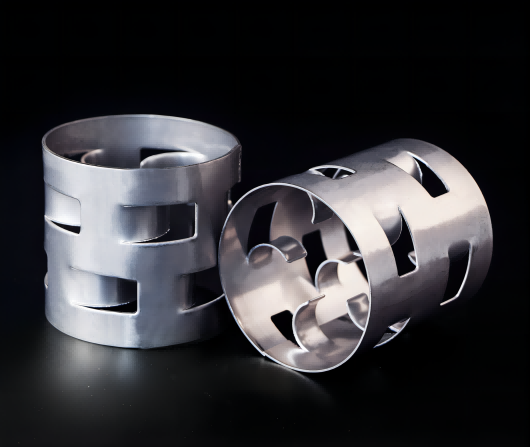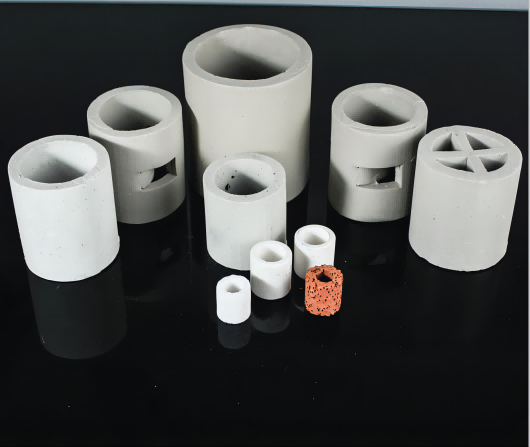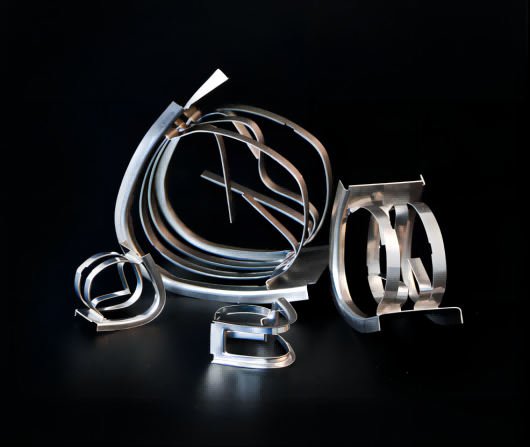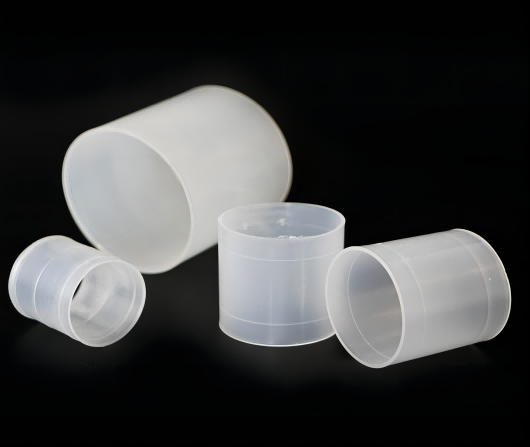

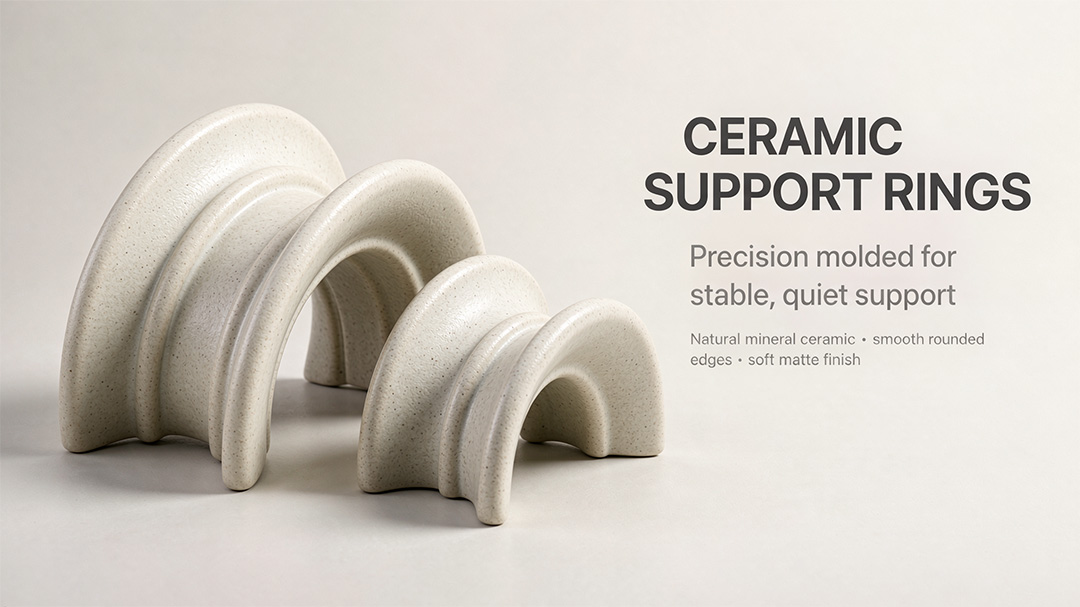
Figure 1: Ceramic Raschig rings (white chemical porcelain, left) vs. metal Raschig rings (SS316L stainless steel, right) — two material paths for different service conditions.
Engineer's Brief: Raschig rings are the oldest and simplest random packing geometry — a plain tube cut to length equal to its diameter. The choice between ceramic and metal comes down to one question: what is your service fluid? Ceramic (chemical porcelain/stoneware) dominates in strong acid scrubbing where metal would corrode; metal (SS304/316L, carbon steel) wins in high-temperature, high-mechanical-load, or non-corrosive services where ceramic would fracture. This guide compares both and gives you a clear size-selection framework.
Raschig rings have no internal windows or corrugations — their performance depends almost entirely on surface area (set by size) and wettability (set by material). The wrong material fails catastrophically:
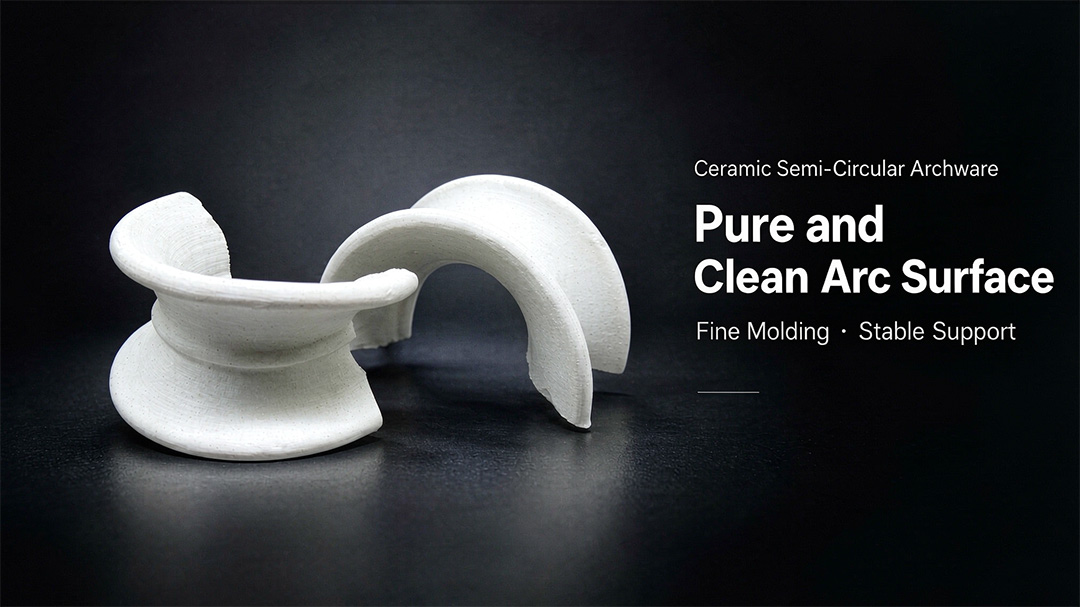
Figure 2: Cross-section detail of a 50mm ramicec Raschig ring — wall thickness 6-8mm provides mechanical strength while maintaining 60-65% voidage.
The defining advantage of ceramic Raschig rings is chemical inertness. Here's the detailed comparison:
| Service Fluid | Ceramic (Porcelain/Stoneware) | Metal (SS316L) | Winner |
|---|---|---|---|
| H2SO4 (≤ 70%, ≤ 80°C) | Excellent — no attack | Good (concentration dependent) | Ceramic |
| H2SO4 (> 70% or > 80°C) | Excellent | Poor — rapid pitting | Ceramic |
| HCl (all concentrations) | Excellent | Poor — pitting corrosion | Ceramic |
| HNO3 | Excellent | Fair (concentration/temp dependent) | Ceramic |
| HF / Fluorides | Poor (attacks silica) | Poor (attacks passive layer) | Neither — use PTFE-lined or special alloy |
| NaOH / Caustic (> 10%) | Poor — slow dissolution | Excellent | Metal |
| Organic Solvents | Excellent | Excellent | Tie (ceramic slightly better for trace acids) |
| High-Temp (> 200°C) | Excellent (up to 1000°C) | Limited by alloy (SS316L max 450°C) | Ceramic |
Note: For strong acid + high temperature combinations, consider high-alumina ceramic (92-95% Al2O3) which offers 3× the acid resistance of standard porcelain.
Size selection is a trade-off between surface area (mass transfer efficiency) and pressure drop. Smaller rings = more area but higher ΔP. Here's how to choose:
| Nominal Size (mm) | Surface Area (m²/m³) | Voidage (%) | Packing Factor (F) | Best Application |
|---|---|---|---|---|
| 25 | 190–210 | 60–65 | 220–250 | Lab columns, small-diameter towers (≤ 300mm), high-efficiency absorption |
| 38 | 130–150 | 62–67 | 140–170 | Pilot plants, medium towers (300–800mm), SO2 scrubbing |
| 50 | 100–115 | 65–70 | 100–120 | Full-scale acid towers, 800mm–2m diameter, general absorption |
| 76 | 70–85 | 68–72 | 65–80 | Large-diameter towers (> 2m), low ΔP critical, cooling + absorption |
Size Selection Rules of Thumb:
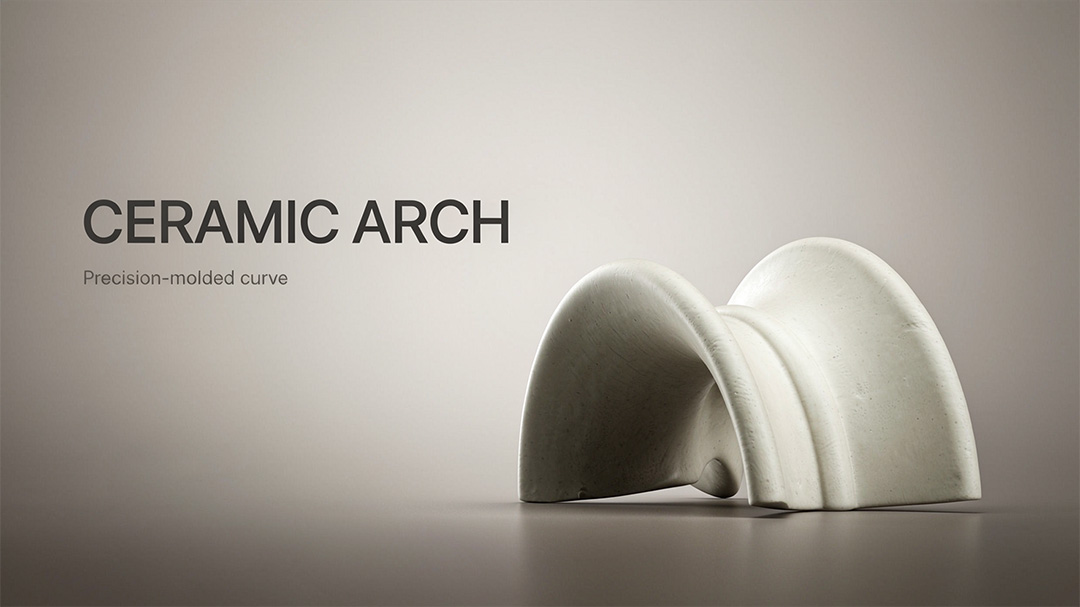
Figure 3: Left — ceramic Raschig rings in H2SO4 drying tower (corrosion-free after 3 years). Right — metal Raschig rings in solvent recovery column (SS316L, no acid exposure).
| Property | Ceramic (Porcelain) | Metal (SS316L) |
|---|---|---|
| Density (kg/m³) | 2,200–2,400 | 7,900–8,000 |
| Bulk Density (kg/m³) | 700–850 | 400–500 |
| Crush Strength (N/ring) | 2,000–5,000 (brittle — no impact) | High — ductile, handles impact |
| Max Operating Temp | 1,000°C+ | 450°C |
| Thermal Shock Resistance | Poor — cracks above 50°C/min | Excellent |
| Wettability | Excellent — hydrophilic surface | Good — hydrophobic without treatment |
| Cost (Relative) | $ (low) | $$$ (high) |
| Typical Bed Depth | 2–6m (heavy — check tower load) | 3–8m (lighter, deeper beds OK) |
Ceramic rings are brittle — improper installation causes breakage that clogs the bed and destroys separation efficiency. Metal rings are more forgiving but still require proper support.
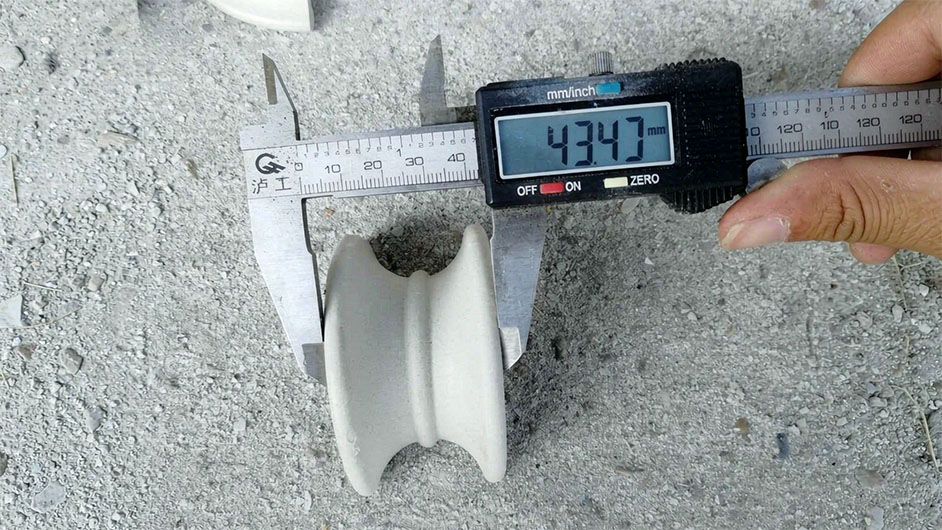
Figure 4: Ceramic Raschig rings being charged into a 2.4m ID H2SO4 drying tower using a canvas chute to prevent breakage.
Q: Can I use ceramic Raschig rings in a vacuum distillation column?
A: Not recommended. Ceramic rings have high packing factor (F = 100–250), meaning high pressure drop per theoretical stage. In vacuum service where ΔP must be < 0.5 kPa/stage, use structured packing or metal Pall rings instead. Ceramic rings are best for atmospheric or positive-pressure acid towers.
Q: What's the difference between chemical porcelain and stoneware Raschig rings?
A: Chemical porcelain is fired at higher temperature, has lower water absorption (< 0.5%), and higher acid resistance. Stoneware is more porous (water absorption 1–3%) and slightly cheaper but less resistant to strong acids at elevated temperature. For H2SO4 > 70% or T > 80°C, always specify chemical porcelain.
Q: How does Raschig ring performance compare to Pall rings or multi-ball hollow balls?
A: Raschig rings have the highest packing factor (worst pressure drop) of any random packing geometry. Pall rings with internal windows cut F by 50–60%. Multi-ball hollow balls have the lowest F but poor mass transfer. Choose Raschig rings only when material compatibility demands ceramic (strong acid) and efficiency is secondary — or when budget is the primary constraint (they're the cheapest packing available).
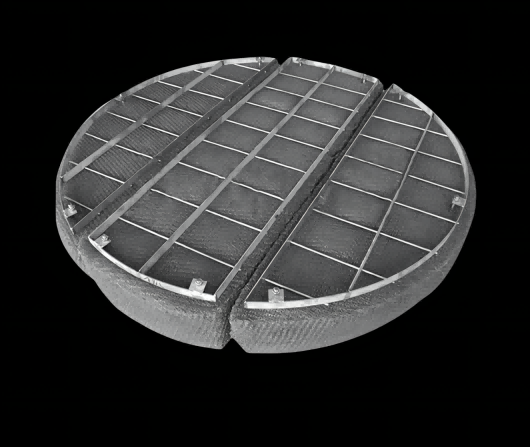
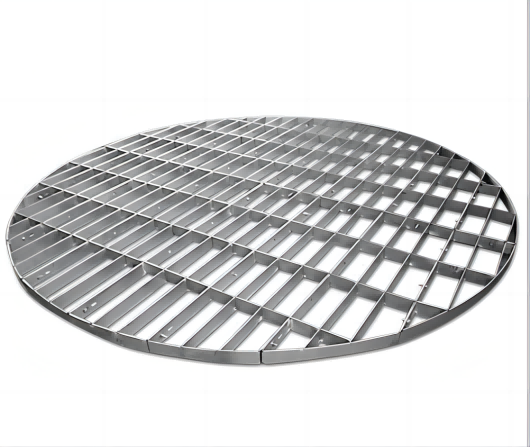
FXSINO is a manufacturer of tower packing & internals — ceramic Raschig rings, metal Raschig rings, Pall rings, support grids, and liquid distributors. Custom sizes, chemical porcelain and SS304/316L, shipped worldwide.
Tell us your tower diameter, bed depth, service fluid (concentration & temperature), and whether you need ceramic or metal. We'll recommend the right ring size, calculate total volume and weight load on your tower, and provide a same-day quote with lead time. FXSINO supplies complete packed tower solutions — from support grids and bed limiters to liquid distributors.
Contact FXSINO: jackieqiu9202@gmail.com | +86 18507999558
 Адрес
: Intersection of Jinguang Avenue and Chongqing Middle Road, Anyuan Industrial Park, Anyuan District, Pingxiang City, Jiangxi
Адрес
: Intersection of Jinguang Avenue and Chongqing Middle Road, Anyuan Industrial Park, Anyuan District, Pingxiang City, Jiangxi Тел.
: +86-18507999558
Тел.
: +86-18507999558 Электронная почта
: sales@fxsino.com
Электронная почта
: sales@fxsino.com WhatsApp
:
+86-18507999558
WhatsApp
:
+86-18507999558 Поддерживается сеть IPv6
Карта сайта
| XML | блог
| политика конфиденциальности
Поддерживается сеть IPv6
Карта сайта
| XML | блог
| политика конфиденциальности