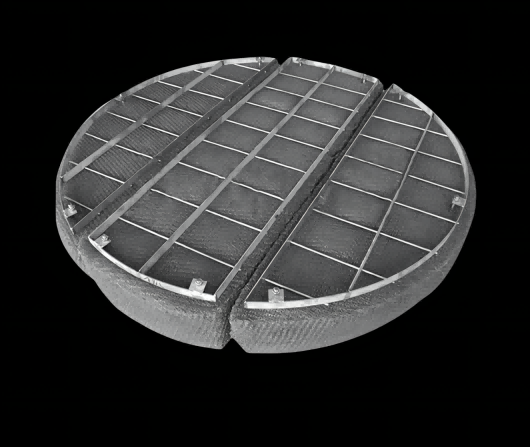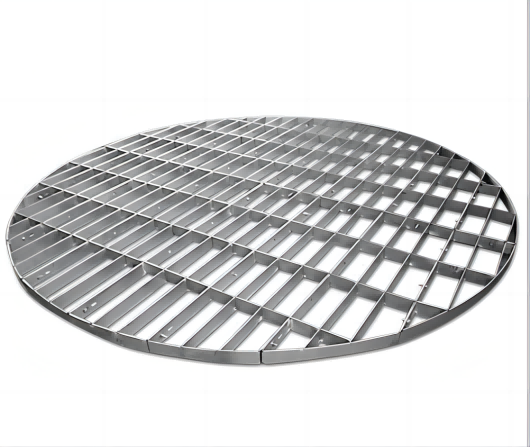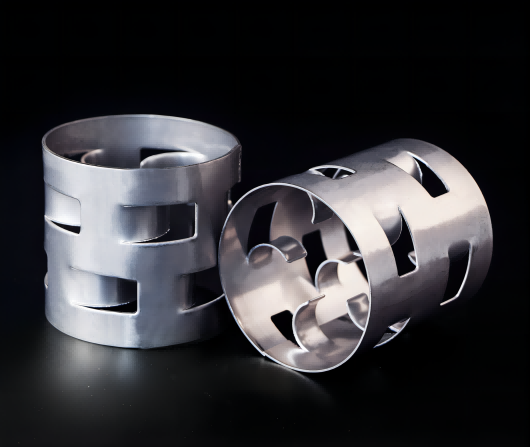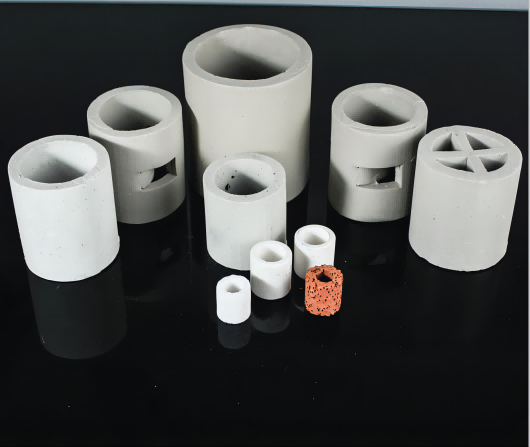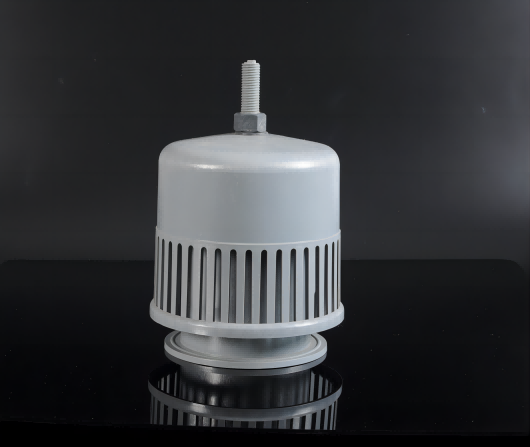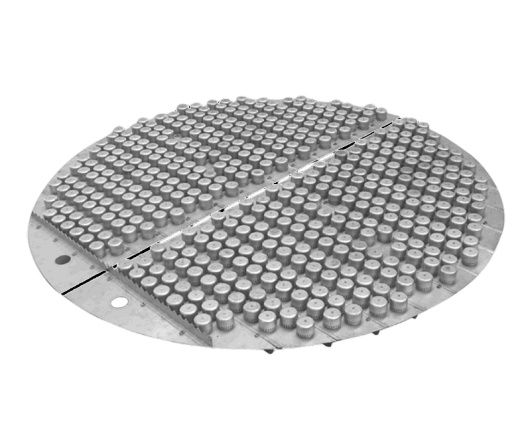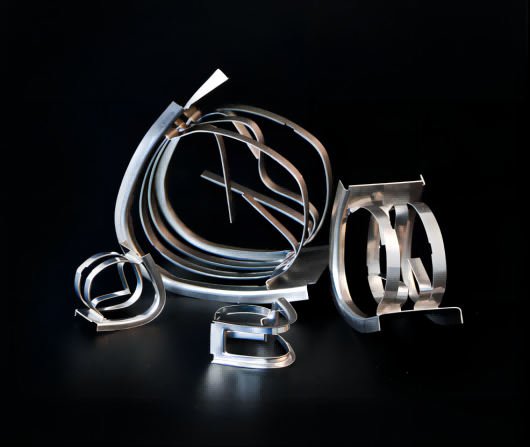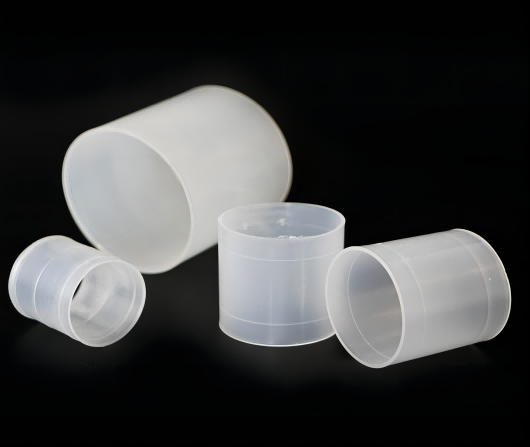

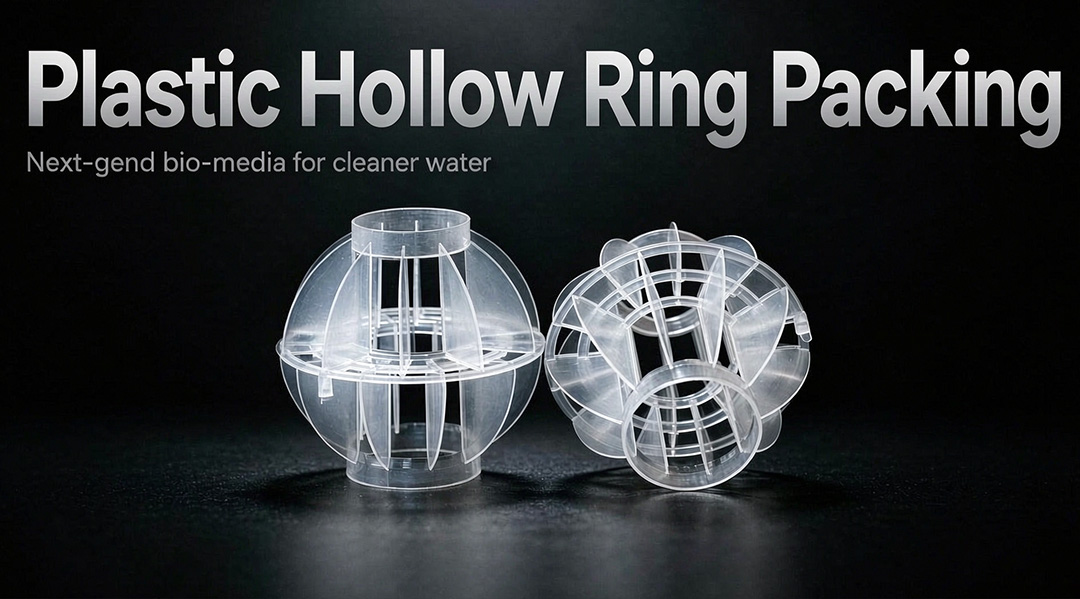
Figure 1: PP Plastic Hollow Ring (Ripple Ring) packing — showing the characteristic corrugated surface and hollow center for high voidage.
Engineer's Brief: Plastic Hollow Ring Packing (commonly called Ripple Ring) is a cost-effective random packing with a corrugated outer wall and hollow core. The ripple design increases surface turbulence without sacrificing void space, delivering 15–20% better mass transfer than standard Raschig rings at half the pressure drop of solid saddles. Made in PP (polypropylene) or PE (polyethylene), it excels in cooling towers, scrubbers, and general absorption service.
Unlike a smooth-walled Raschig ring, the ripple ring features a series of transverse corrugations (ripples) on its cylindrical wall. This simple modification creates micro-turbulence as liquid flows over the surface, breaking up laminar films and improving gas-liquid contact. The hollow core maintains ≥ 90% voidage, so gas can rise freely even in deep beds.
Key geometric advantages:
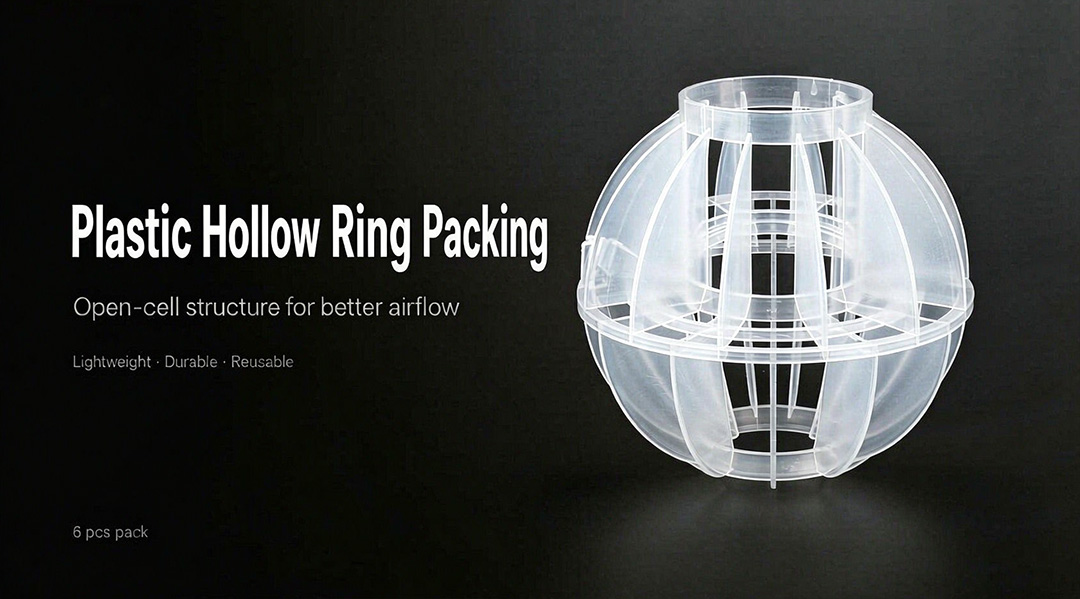
Figure 2: Close-up of ripple ring corrugated wall — the transverse ridges create surface turbulence for better liquid spreading.
FXSINO manufactures ripple rings in five standard sizes. Custom sizes available on request.
| Nominal Size (mm) | Actual OD × H (mm) | Surface Area (m²/m³) | Voidage (%) | Pieces per m³ | Packing Factor (F) |
|---|---|---|---|---|---|
| 25 | 25 × 25 | 185–200 | ≥ 90 | ~52,000 | 140 |
| 38 | 38 × 38 | 130–145 | ≥ 92 | ~16,000 | 92 |
| 50 | 50 × 50 | 100–110 | ≥ 93 | ~6,500 | 65 |
| 63 | 63 × 63 | 80–90 | ≥ 94 | ~3,200 | 48 |
| 76 | 76 × 76 | 65–75 | ≥ 95 | ~1,800 | 36 |
Note: Data above are industry-standard reference values. Contact FXSINO for certified performance curves and实测 (measured) data.
Both polypropylene (PP) and polyethylene (PE) offer excellent chemical resistance, but they differ in temperature tolerance and mechanical stiffness:
| Property | Polypropylene (PP) | Polyethylene (PE) |
|---|---|---|
| Max Continuous Temp | 100°C | 80°C |
| Density (g/cm³) | 0.90–0.91 | 0.94–0.96 |
| Stiffness / Creep | Higher stiffness, better at elevated temp | More flexible, prone to creep above 60°C |
| Chemical Resistance | Excellent to acids, alkalis, solvents | Excellent to acids, alkalis; slightly better to some organics |
| UV Resistance | Poor (additive required for outdoor) | Moderate (black PE has carbon black UV protection) |
| Typical Color | White, Beige, Custom | Natural (milky), Black |
| Best For | Hot water cooling, steam stripping, general absorption | Ambient cooling towers, outdoor scrubbers (black PE) |
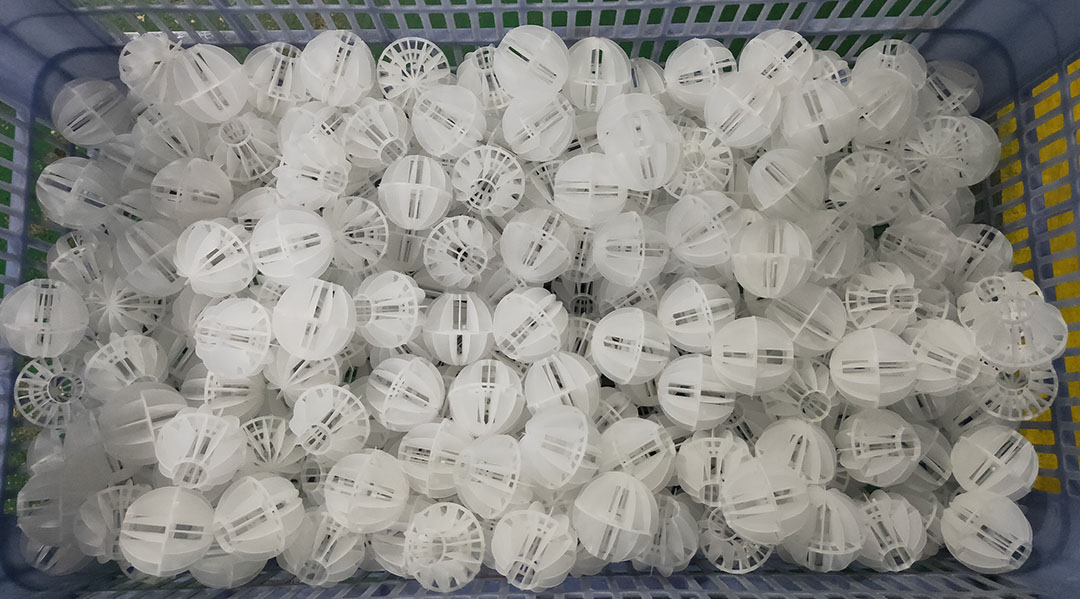
Figure 3: Material comparison — white PP (left) and black PE (right) ripple rings. PE offers better UV resistance for outdoor cooling towers.
How does the ripple ring stack up against other common plastic random packings?
| Packing Type (50mm) | Voidage (%) | ΔP @ F=1.5 (Pa/m) | HETP (m) | Relative Cost |
|---|---|---|---|---|
| Ripple Ring (PP) | 93–94 | 60–80 | 0.6–0.8 | $$ |
| Plastic Pall Ring | 90–92 | 80–100 | 0.5–0.7 | $$ |
| Plastic Saddle (Intalox) | 78–82 | 120–150 | 0.7–1.0 | $ |
| Multi-ball Hollow Ball | ≥ 95 | 40–60 | 1.2–1.5 | $ |
Verdict: Ripple rings offer the best balance of low pressure drop and good mass transfer for cooling & absorption. Choose Pall rings if you need maximum efficiency (lower HETP); choose ripple rings if you need maximum throughput with acceptable efficiency.
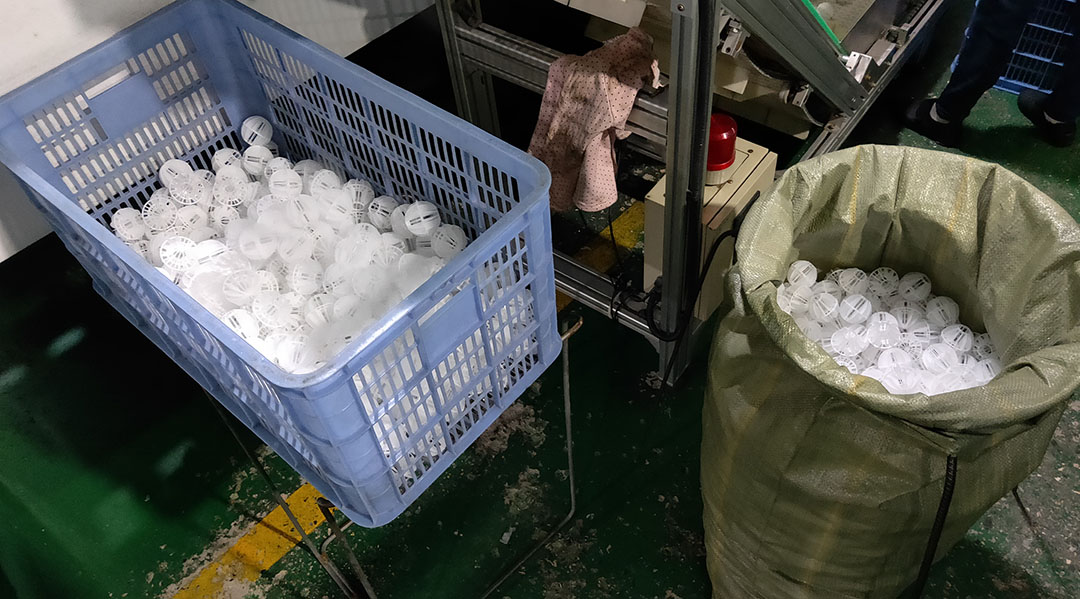
Figure 4: Ripple ring packing being charged into a counter-flow cooling tower — even distribution ensures uniform water spread and gas contact.
Q: Ripple ring vs. Pall ring — which should I choose?
A: Pall rings have internal windows (fingers) that create more internal surface contact, giving slightly better mass transfer (lower HETP). Ripple rings have no windows, so they're simpler to mold and cost less, while the corrugated wall still provides good turbulence. Choose Pall rings for distillation/efficiency-critical service; choose ripple rings for cooling, rough absorption, and cost-sensitive projects.
Q: Can I use PP ripple rings in a hot water cooling tower (> 80°C)?
A: PP grade handles up to 100°C continuously, so it's fine for most hot water applications (cooling tower return water is typically 40–55°C). If your tower sees intermittent spikes above 100°C, consider PVDF or PTFE-lined alternatives — contact FXSINO for high-temp options.
Q: How much does a cubic meter of ripple ring packing weigh?
A: Bulk density depends on size and material. For 50mm PP ripple rings, expect ~55–65 kg/m³ (including ~5% void settling). PE is slightly heavier at ~70–80 kg/m³. This is light enough that most towers don't need structural reinforcement — unlike ceramic packings at 700+ kg/m³.
FXSINO is a manufacturer of tower packing & internals — plastic ripple rings, Pall rings, support grids, and liquid distributors. Custom sizes, PP/PE/PVDF materials, shipped worldwide.
Tell us your tower diameter, bed depth, service fluid (cooling water, acid scrubbing, etc.), operating temperature, and preferred material (PP or PE). We'll recommend the right ring size, calculate total volume, and provide a same-day quote with lead time. FXSINO supplies complete packed tower solutions — from support grids and bed limiters to liquid distributors.
Contact FXSINO: jackieqiu9202@gmail.com | +86 18507999558
 Адрес
: Intersection of Jinguang Avenue and Chongqing Middle Road, Anyuan Industrial Park, Anyuan District, Pingxiang City, Jiangxi
Адрес
: Intersection of Jinguang Avenue and Chongqing Middle Road, Anyuan Industrial Park, Anyuan District, Pingxiang City, Jiangxi Тел.
: +86-18507999558
Тел.
: +86-18507999558 Электронная почта
: sales@fxsino.com
Электронная почта
: sales@fxsino.com WhatsApp
:
+86-18507999558
WhatsApp
:
+86-18507999558 Поддерживается сеть IPv6
Карта сайта
| XML | блог
| политика конфиденциальности
Поддерживается сеть IPv6
Карта сайта
| XML | блог
| политика конфиденциальности